Conservation Awareness & Action
Why Do Orca Target Shark Livers? A Mystery Beneath the Waves.
Saturday, September 13, 2025 at 10:00 AM
→ Sep 13, 11:30 AM
· Online Webinar
About this event
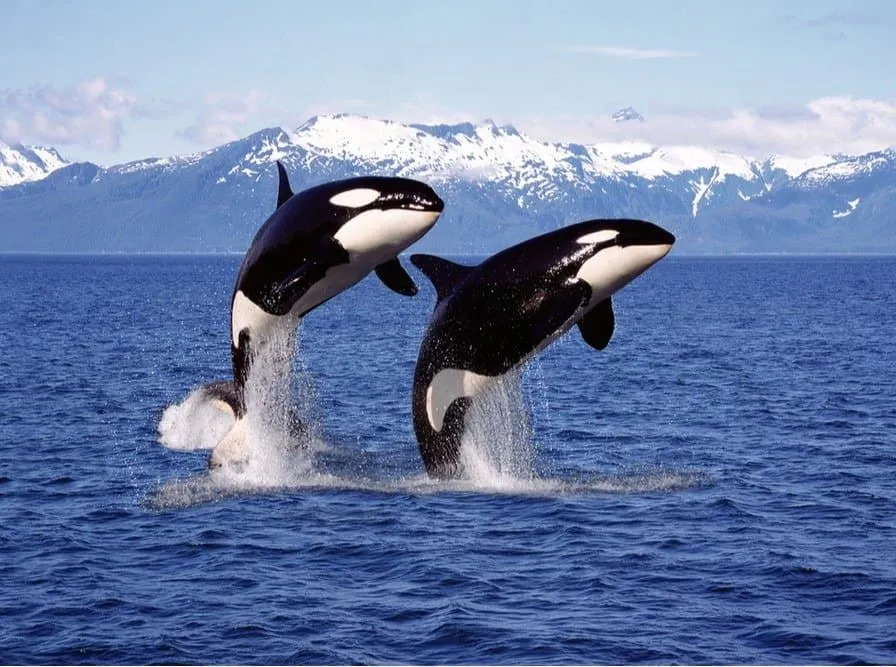
On the 13th of September, we came together in a dynamic online session to explore one of the most fascinating behaviors in the marine world—how Orca selectively hunt sharks with remarkable precision. What seemed like a simple discussion quickly evolved into an eye-opening exchange of ideas that challenged participants to think deeper about intelligence, survival, and the complexity of nature.
The session was centered around the striking behavior of orcas targeting the livers of sharks, a phenomenon that has intrigued scientists and conservationists alike. Participants examined how these marine predators are capable of removing a shark’s liver within minutes, raising compelling questions about whether such actions are driven purely by instinct or a higher level of learned intelligence.
Rather than passively consuming information, attendees actively engaged in thought-provoking discussions. Why the liver? What does this reveal about energy efficiency in the wild? Could such specialized hunting techniques disrupt marine ecosystems, particularly shark populations? These questions sparked diverse perspectives, encouraging participants to analyze wildlife behavior beyond surface-level observations.
A particularly captivating aspect of the conversation revolved around the idea of culture in the animal kingdom. The fact that orcas can teach and pass down hunting strategies opened up debates about whether animals, much like humans, possess forms of shared knowledge and learned behavior across generations.
The discussion also brought the topic closer to home by imagining the presence of orcas along Kenya’s coastline. This shifted the conversation from theory to personal reflection—would such an encounter inspire fear, curiosity, or excitement? The answers revealed not only individual perceptions but also a growing sense of connection to global wildlife.
By the end of the session, it was clear that this was more than just a discussion—it was a mental deep dive into the hidden intelligence of nature. Participants walked away with sharpened curiosity, a deeper appreciation for marine ecosystems, and a renewed drive to understand and protect the natural world.
For those yet to join such conversations, this event stands as proof that conservation doesn’t always begin in the field. Sometimes, it starts with a question, a discussion, and the willingness to see the natural world from a new perspective.
The session was centered around the striking behavior of orcas targeting the livers of sharks, a phenomenon that has intrigued scientists and conservationists alike. Participants examined how these marine predators are capable of removing a shark’s liver within minutes, raising compelling questions about whether such actions are driven purely by instinct or a higher level of learned intelligence.
Rather than passively consuming information, attendees actively engaged in thought-provoking discussions. Why the liver? What does this reveal about energy efficiency in the wild? Could such specialized hunting techniques disrupt marine ecosystems, particularly shark populations? These questions sparked diverse perspectives, encouraging participants to analyze wildlife behavior beyond surface-level observations.
A particularly captivating aspect of the conversation revolved around the idea of culture in the animal kingdom. The fact that orcas can teach and pass down hunting strategies opened up debates about whether animals, much like humans, possess forms of shared knowledge and learned behavior across generations.
The discussion also brought the topic closer to home by imagining the presence of orcas along Kenya’s coastline. This shifted the conversation from theory to personal reflection—would such an encounter inspire fear, curiosity, or excitement? The answers revealed not only individual perceptions but also a growing sense of connection to global wildlife.
By the end of the session, it was clear that this was more than just a discussion—it was a mental deep dive into the hidden intelligence of nature. Participants walked away with sharpened curiosity, a deeper appreciation for marine ecosystems, and a renewed drive to understand and protect the natural world.
For those yet to join such conversations, this event stands as proof that conservation doesn’t always begin in the field. Sometimes, it starts with a question, a discussion, and the willingness to see the natural world from a new perspective.