Why Pharaoh Ants Are the World's Most Successful Pest 🐜
By Johnson Owino · June 23, 2026
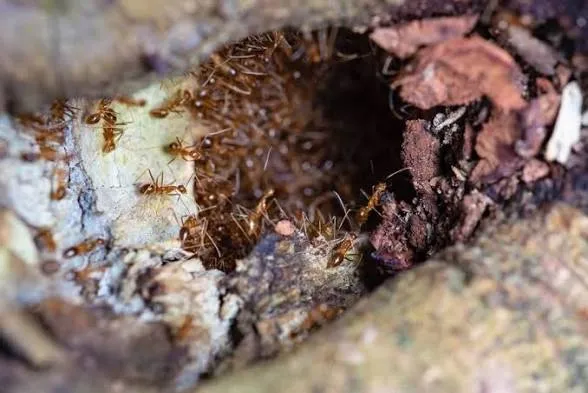
(A highly dense cluster of tiny ants packed tightly inside a narrow crevice between rough tree bark and decaying wood.Source: Global Invasive Species Database (GISD)
You've seen them. A single tiny ant on your counter, wandering like it's lost. You blink, and suddenly there's a line of them — a perfect, moving trail marching straight toward your sugar jar. They're small, fast, and annoyingly determined. But here's the thing: these ants aren't just pests. They're a secret empire. They've conquered the world without anyone noticing.
The ants in your kitchen are called pharaoh ants (Monomorium pharaonis). They're tiny — only about 1.5 to 2.0 millimetres long — and light yellow to reddish brown in colour. They're originally from Africa, but they've spread to nearly every corner of the planet. In heated buildings, they breed year-round. They never stop.
Most ant colonies have one queen.
Pharaoh ant colonies can have up to 200 queens. If you kill one queen, dozens more are still alive and reproducing. This is why they're nearly impossible to wipe out. Unlike most ants, pharaoh ants don't fight each other across colonies. They lack nestmate recognition, meaning there's no hostility between neighbouring colonies. This allows them to form vast, interconnected networks called supercolonies that can span entire buildings.
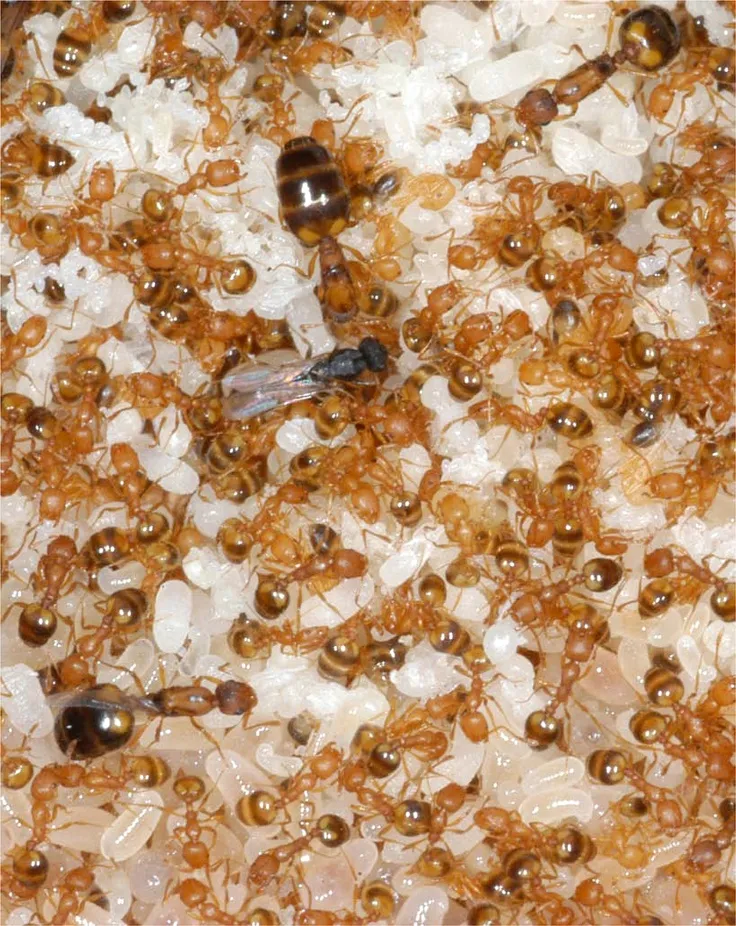
(overhead view into an active breeding colony, showcasing numerous workers tending to a massive pile of eggs and larvae, alongside queen ants and a black winged alate.Source: PubMed Central )
Most ants reproduce through "nuptial flights"
Winged males and females fly off to mate. The queens never need to leave, which means they can keep reproducing safely and continuously. Instead of swarming, pharaoh ants spread through budding — a queen and a few workers simply walk to a new location and start a new colony. A single seed colony can populate an entire office block in less than six months.
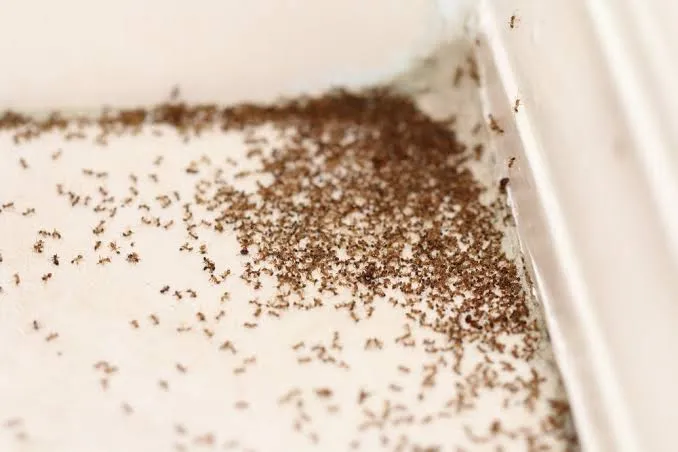
(Ants swarming out in a scattered, chaotic pattern across a pale floor.Source: University of Florida)
A queen can lay 400 or more eggs in her lifetime. From egg to adult takes only 38 to 45 days. They breed continuously year-round in heated buildings. They nest in the most unexpected places: wall voids, behind baseboards, between sheets of paper, inside clothing, between books, inside electrical outlets — even inside sealed hospital equipment. A nest can be small enough to fit in a thimble.
Why They're a Problem
They eat everything — sugar, grease, dead insects, toothpaste, shoe polish. They can gnaw holes in silk, rayon, and rubber. And because of budding and multiple queens, killing one nest often causes others to split and spread further. They're resilient in ways that make them nearly impossible to control.
But the real danger isn't the damage they do to property. It's what they carry.
Pharaoh ants don't bite or sting, but they're not clean either. They crawl through drains, garbage, and other unsanitary places, picking up harmful bacteria along the way. Then they track those germs onto your food, countertops, and even medical equipment. They've been found carrying bacteria like Salmonella, Staphylococcus, and Pseudomonas — all of which can cause serious infections.
In hospitals, the risk is even higher.
These ants have been found in surgical wounds, IV drips, and sterile dressings. For someone who's already sick or has a weak immune system, an infection from a pharaoh ant can be life-threatening. So while you probably won't get sick from a single ant in your kitchen, the danger is real — especially in places where vulnerable people are present.
Their Environmental Role
Here's where things get complicated. In their native range, pharaoh ants play a genuine ecological role. They're scavengers — they feed on dead insects and organic matter, helping to break down and recycle nutrients back into the soil. Like other ants, they aerate the soil and contribute to decomposition, which keeps ecosystems functioning.
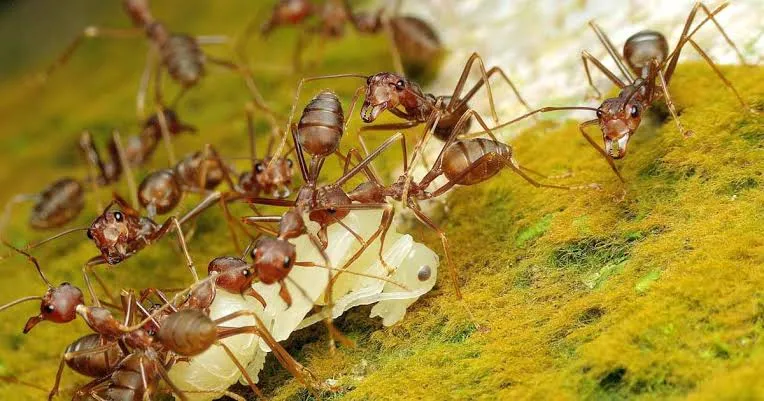
(Ants working together to lift and transport a large, plump, translucent white insect larva.Source:AntWeb.org / National Geographic Education.)
But outside their native range, they become a different story. As an invasive species, they disrupt local ecosystems. They compete with native ant species for food and nesting sites, often outcompeting them because of their massive colonies and rapid reproduction. In some cases, they can reduce the diversity of other insects by preying on their young or monopolising food sources. They don't have natural predators in many introduced environments, which allows their populations to explode unchecked.
So their environmental impact depends on where they are. In their native African ecosystems, they're part of the balance. Everywhere else, they're a disruption.
A Different Perspective
Are they really invaders? Or are they just incredibly good at surviving in a world we built for them? They're not malicious. They're not out to get you. They're just survivors — perfected over millions of years.
The pharaoh ant isn't just a pest. It's a master strategist, an insect that has evolved a unique set of survival tactics that make it one of the most successful species on the planet.
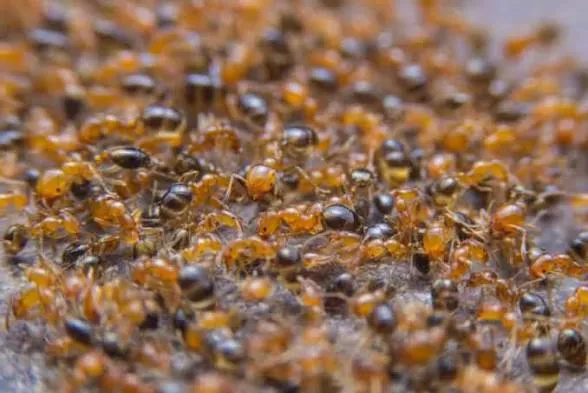
(A massive, overlapping pile of shiny, golden-brown ants Source:
ResearchGate.)
What Do You Think?
Have you ever stopped to watch a line of pharaoh ants and wondered what they were really up to? Think about the hidden empire marching across your counter. And then decide — do you really need to get rid of them, or can you just let them be? 🐜
Comments (0)
Log in to join the discussion.
Log in