When Waves Stopped Carrying Life: A Bird Flu Hits the Seal World🦭
By Johnson Owino · June 20, 2026
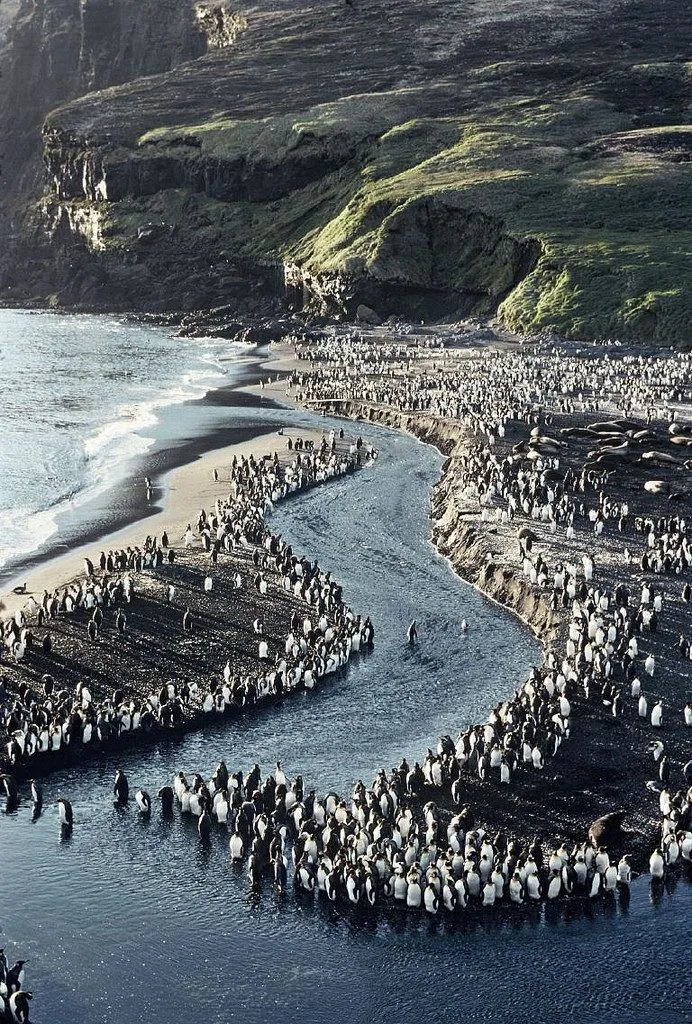
(Landscape documentation of a massive king penguin colony and elephant seals gathered around the meltwater river at St. Andrews Bay, South Georgia Island. Source: Southern Ocean Editorial Stock Archives.)
Imagine a beach covered not in sand, but in bodies. Thousands of baby seals, perfectly healthy just weeks earlier, now lying motionless. Their mothers circle nearby, confused, calling out for pups that will never answer.
This isn't a scene from a dystopian film. It's happening right now on a remote island in the Indian Ocean.
A Death Toll That Defines Devastating
On Australia's sub-Antarctic Heard Island, the numbers are staggering. Scientists documented 13,359 dead southern elephant seal pups out of a population of 17,364. That's more than 75% of all pups born that season. In some breeding colonies, the mortality rate hit a catastrophic 97%. And researchers believe even these figures may underestimate the true toll, as pups were still dying when the final surveys were conducted.
The beaches of Heard Island are littered with bodies. Scientists describe arriving to find hundreds of dead seal pups and widespread carcasses scattered across the
breeding grounds.
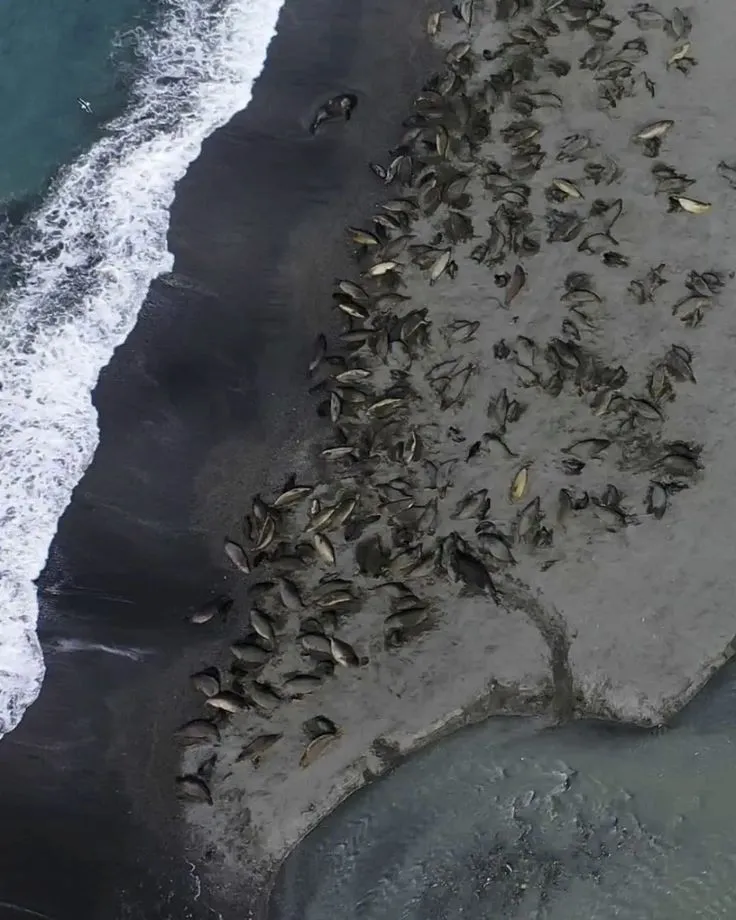
(Aerial drone footage documenting the mass mortality of southern elephant seal pups on the beaches of Heard Island due to the H5N1 avian influenza outbreak. Source: Australian Antarctic Program (AAP).)
Why the Pups?
So why are the babies taking the hardest hit?
First, their immune systems are still developing — like human babies, they haven't built up defenses against novel viruses. H5N1 is aggressive, and their young bodies simply can't fight it off.
Second, elephant seals breed in dense, crowded colonies. Thousands of mothers and pups packed together on a single beach. That's a perfect environment for a virus to spread fast. A sick pup in one corner can infect hundreds within days.
Adults do die too,scientists have confirmed that but the pups are the most vulnerable, and they're paying the heaviest price.
Nor are seals the only victims. King penguins, gentoo penguins, Antarctic fur seals, and seabirds have all tested positive for the virus. Of the nine species sampled on the island, six were infected.
Where Did This Virus Come From?
The culprit is H5N1, a highly pathogenic avian influenza virus belonging to the same strain that has been circulating globally since around 2021.
Genetic analysis has traced the virus's arrival at Heard Island to around August 2025. It appears to have traveled a remarkable distance from the French-owned Crozet Islands to the west, carried by migrating wildlife. Scientists describe this as the continued eastward movement of the virus around the sub-Antarctic.
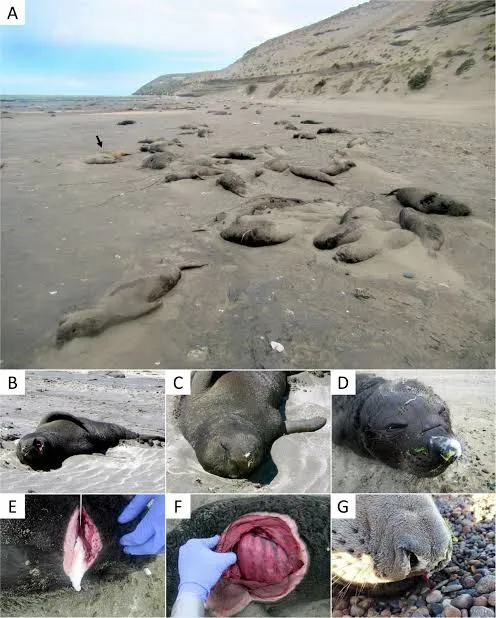
(Field documentation of clinical signs and post moterm findings in affected seals.)
This wasn't an isolated event. The same H5N1 strain has devastated South Georgia in a similar pattern.It has killed an estimated 17,400 seal pups in Argentina and roughly 50,000 seals and sea lions across South America. The virus is also being detected in new mammalian hosts, including bears, cats, dairy cows, foxes, otters, and even a sheep in the UK. Scientists have documented mammal-to-mammal transmission for the first time in these outbreaks.
How Does It Spread? And Are Humans at Risk?
The primary vectors are wild birds, particularly migratory species that carry the virus over vast distances through their droppings and respiratory secretions. Infected birds shed the virus through feces, saliva, and mucus, contaminating the environment. When seals haul out on beaches near infected seabird colonies or in contaminated areas, they become exposed. The virus
can then spread among seals themselves.
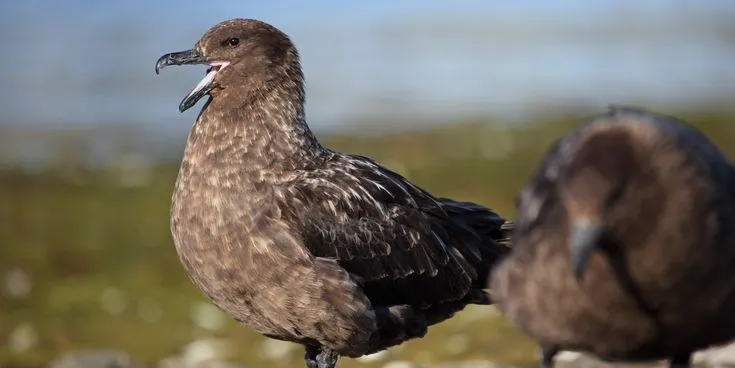
(Source:Sea Kayak.Migratory seabirds like Skuas travel distances acting as vectors for H5N1)
So, can humans catch H5N1 from seals? The short answer is: it's possible, but very rare.
Almost all human infections have been linked to close contact with infected live or dead birds or contaminated environments. However, health organizations note that there have been instances of transmission from infected mammals to humans. Marine mammals like seals can carry and transmit these viruses. The U.S. has reported approximately 77 human cases linked to this clade since 2022, and globally there have been more than 90.
The good news is that human-to-human transmission remains rare and unsustained. The virus would need to acquire specific mutations to easily infect and spread between people. Still,a virus moving from birds to seals has scientists on high alert.
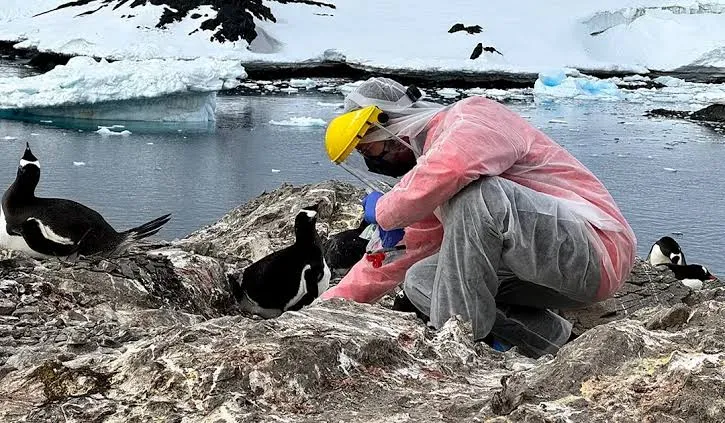
(Source:Polar Journal.Field scientists monitoring wildlife populations for active viral mutations. )
A Sobering Reminder
What we're witnessing isn't just a wildlife tragedy; it's a demonstration of how interconnected our world has become. A virus originating in birds can cross oceans, jump species, and erase entire generations of marine mammals in a single season. As Australia's Environment Minister put it, “the seal deaths are sobering and show we must not be complacent.”
💬
Scientists had been warning about this virus for years. They tracked it across continents. They watched it kill tens of thousands of seals elsewhere. When it reached Heard Island, they weren't caught off guard — they were already there, monitoring.
Knowing that scientists did see this coming, what does a good response actually look like? Is it faster vaccine development? Better surveillance in remote areas? More funding for biosecurity? Or is this simply the kind of tragedy that happens when a virus moves faster than humans can stop it?
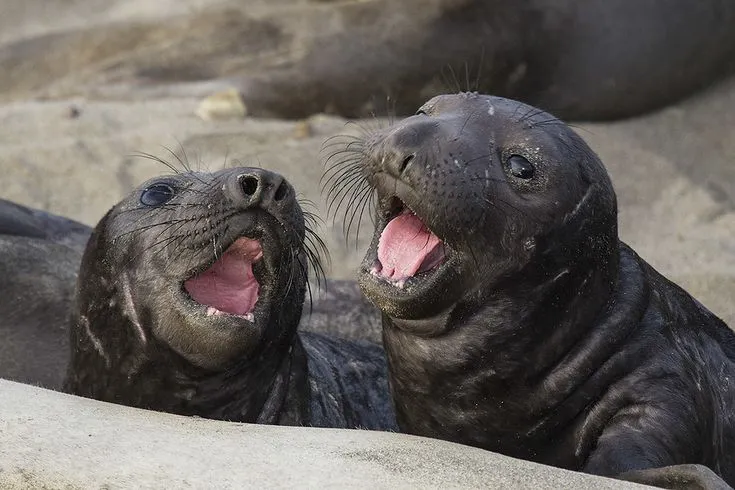
(Mike Reyfam photography.Newborn Southern Elephant Seal pups,South Georgia,Sub–Antarctic)
What would you have done differently dear Environmentalists — if you were the one making the call?
Comments (1)
Log in to join the discussion.
Log in
Sad😥😥😥
It really is. Those numbers are hard to sit with.