The World of Dolphins
By Evans Osumba · April 17, 2026
Echoes of Wisdom, Wonder, and Warning in the Waves
Dolphins are marine animals that have been referred to as intelligent, playful, and friendly creatures that have captured the hearts of many individuals worldwide. However, there is much more behind their fabricated smiles. Join a voyage of discovery as we disclose some of their unique traits, surprising abilities, and deeply held bonds within their pods. These oceanic acrobats, belonging to the order Cetacea with over 90 species ranging from the bottlenose dolphin to the elusive vaquita, aren't just photogenic stars of documentaries, they're ev
olutionary masterpieces, navigating vast blue
frontiers with brains rivalling our own.
From synchronized leaps that defy physics to cultural
traditions passed like family heirlooms, dolphins embody the ocean's symphony
of smarts and spirit. Yet, beneath the surface, they face a tempest of threats
that test their resilience. In this immersive exploration, we'll plunge into
their social worlds, unravel the enigmas of their intellect, celebrate their
joyous antics, and rally for their safeguarding. Whether you're a seasoned
diver or an armchair adventurer, the dolphin's realm reveals nature's profound
poetry, and a poignant plea for protection.
Social Animals: Dolphins and Their Pods - A Symphony of Connections
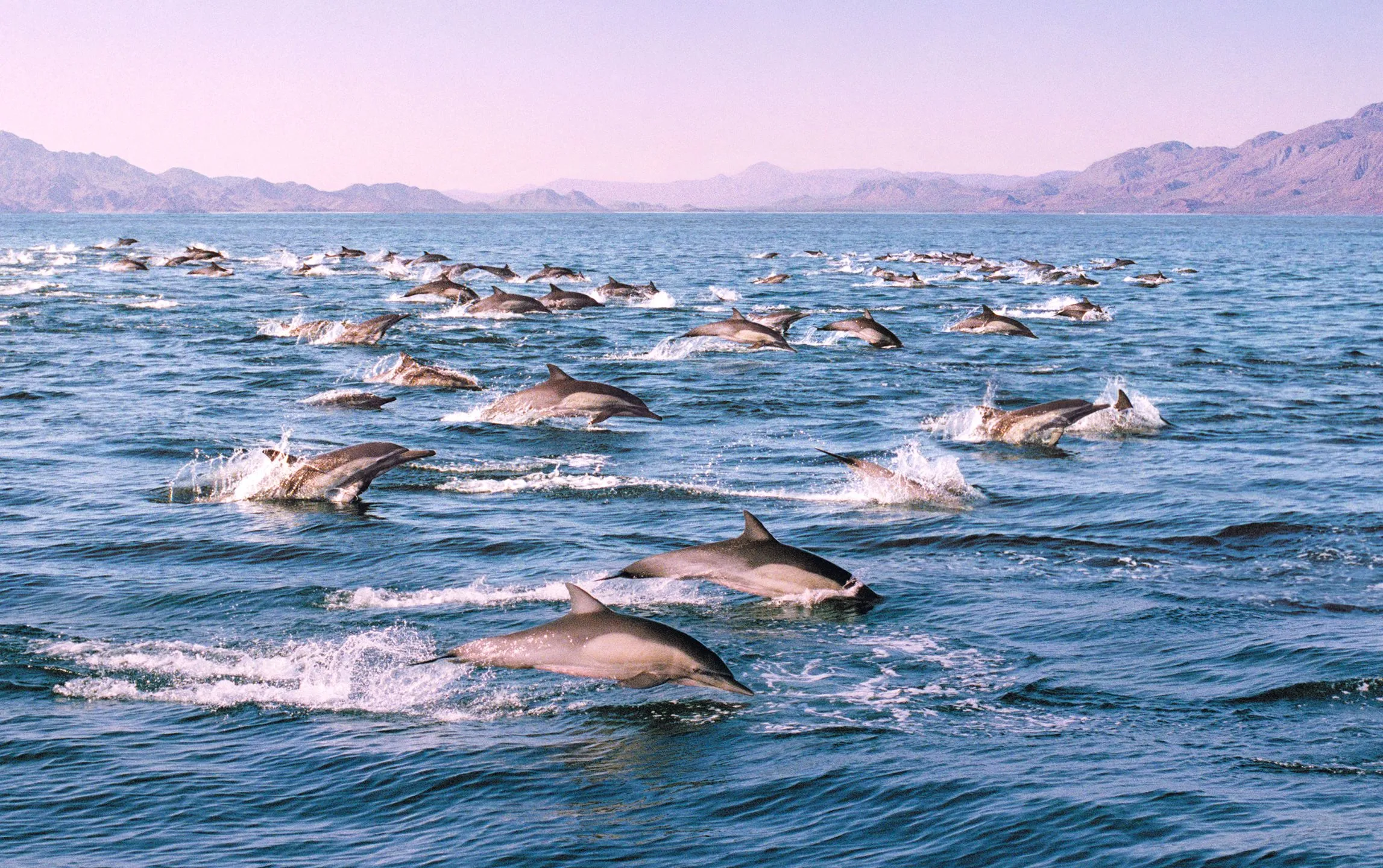
Dolphins are very social creatures; their groups are called
pods. These pods usually consist of families that stay together for many years
and at times for a lifetime. They communicate with each other through a series
of clicks, whistles, and body language, forming the rich social structure so
vital to their survival and well-being.
At the heart of dolphin society lies the pod- a dynamic, fluid network that can swell from a tight-knit family of 5-10 to massive super pods exceeding 1,000 individuals during migrations or feeding frenzies. Bottlenose dolphins, the most studied species, often form fission-fusion societies, where subgroups splinter and reform based on needs like foraging or resting, mirroring human social circles in their complexity. Core bonds endure: mothers and calves remain inseparable for 3-6 years, while lifelong alliances among males, up to 12 strong, bolster hunting prowess and mate guarding. Females, too, weave intergenerational webs, with grandmothers aiding calf-rearing to boost survival rates by 20-30%.
Communication is the glue. Each bottlenose dolphin crafts a
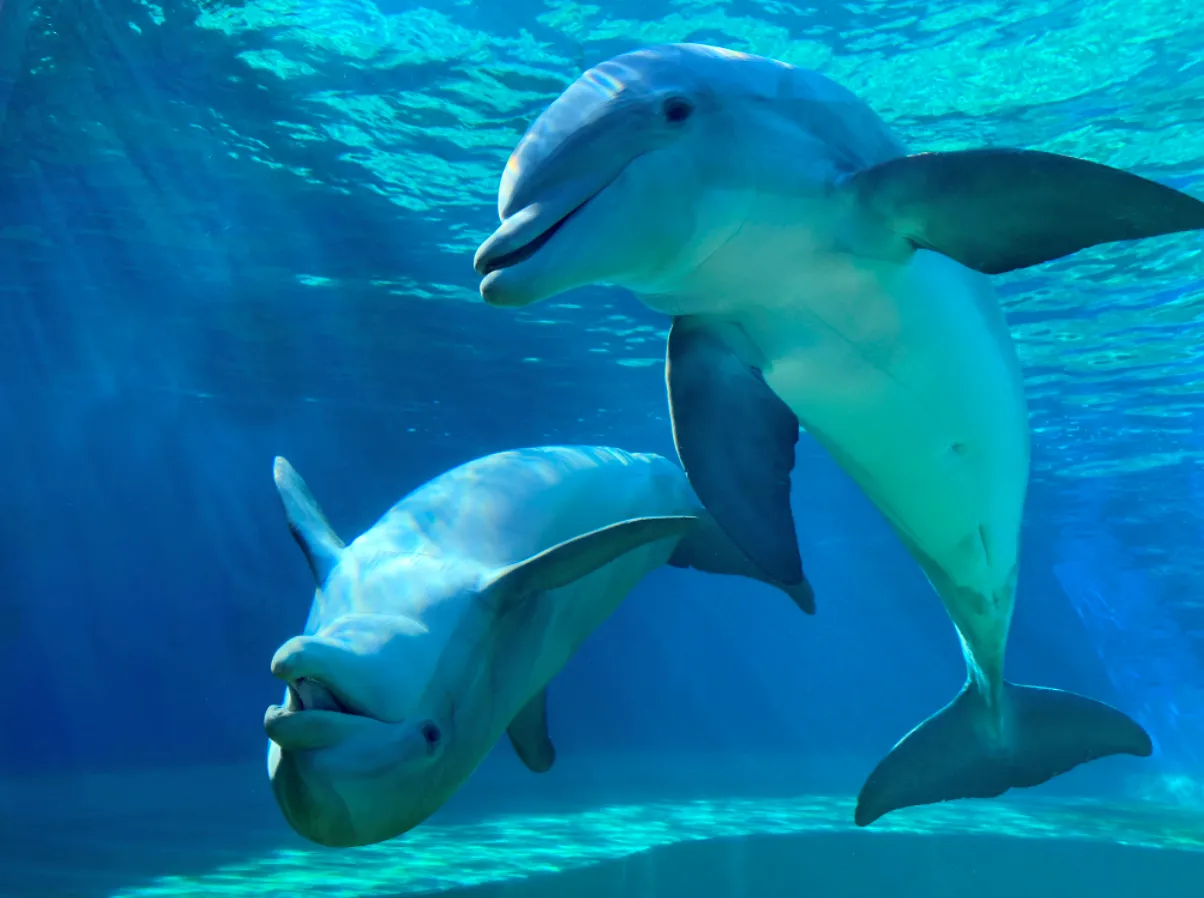
signature whistle - a unique, high-pitched call like a name - emitted up to 20
times per minute during separation, allowing pods to reunite across miles of
murky water. Clicks for echolocation map prey in 3D, while burst-pulses convey
urgency or affiliation, and body slaps signal warnings or flirtations. In Shark
Bay, Australia, pods develop dialects, with regional variations in whistle
contours hinting at cultural dialects akin to human accents. These interactions
foster empathy: dolphins console distressed kin with synchronous swimming or
tactile comfort, underscoring a social fabric woven from trust and reciprocity.
Far from solitary swimmers, pods are dolphin democracies, cooperative,
communicative clans where every flipper counts.
Intelligence and Problem Solving: Brains as Vast as the Sea
Dolphins are intelligent creatures that are highly capable
of understanding complex issues and even identifying themselves in mirrors.
They may even learn from observing behaviours conducted by other dolphins.
Their intelligence also allows them to solve intricate problems with tools in
an innovative manner, a phenomenon rarely found in the animal kingdom.
Dolphin brains are marvels: weighing up to 4 pounds
with convoluted folds rivalling primates, they boast spindle neurons - rare
cells tied to empathy and self-awareness - found in humans, great apes, and now
confirmed in dolphins as of 2025 studies. Encephalization quotients
(brain-to-body ratio) place them second only to humans among mammals, fuelling
feats like mirror self-recognition: bottlenose dolphins not only pass the test
but adorn themselves with marks to investigate, a hallmark of metacognition. Their
episodic memory shines in experiments where they recall acoustic cues from
years prior, while cooperative hunts demand theory of mind - anticipating pod
mates' moves like a chess grandmaster.
Observation fuels innovation. In Sarasota Bay, Florida,
young dolphins shadow elders to master strand-feeding: herding fish onto
beaches for easy pickings, a learned tradition rippling through generations.
Tool use elevates them further. Shark Bay's Indo-Pacific bottlenose dolphins - about
5% of females - wield sea sponges as "gloves" over rostrums to probe
seabeds for stingrays, a maternal-taught skill persisting for millennia and
passed matrilineally, with 2025 research unveiling "sponging
dynasties" where expertise correlates with longer lifespans. Another
rarity: conical shells hoisted as fish-traps, observed in 2020 but expanding in
documentation by 2025, where dolphins lure prey inside before shaking them out.
These aren't isolated tricks; they're cultural toolkits, blending curiosity
with cunning in ways that echo early human ingenuity. As 2025 neurostudies
affirm, dolphin smarts aren't mimicry, they're mastery, problem-solving prowess
that turns the tide in survival's grand game.
Dolphins: The Fun-Loving Sea Creatures - Play as the Pulse of Life
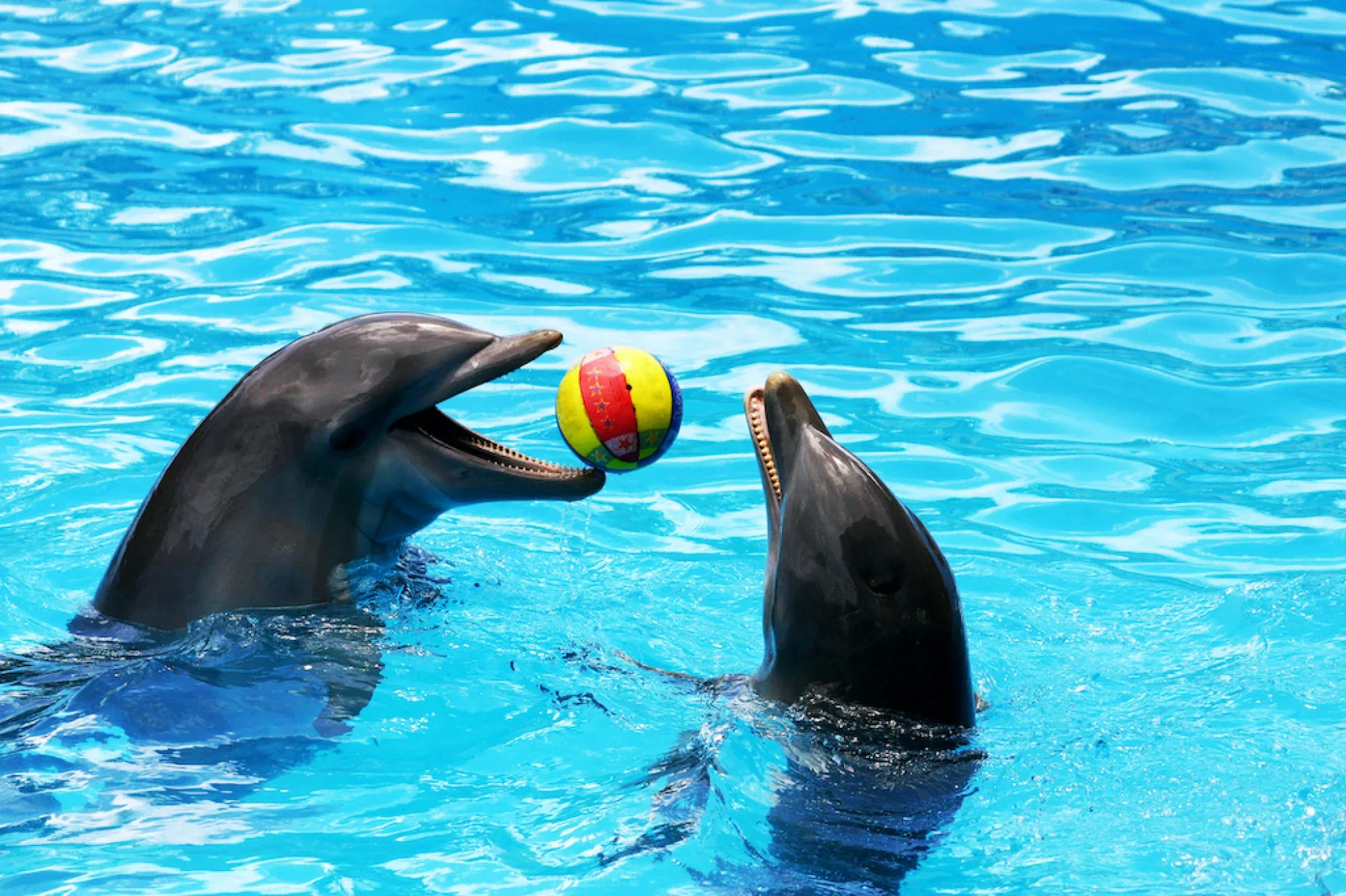
Some of the most engaging attributes of dolphins are their
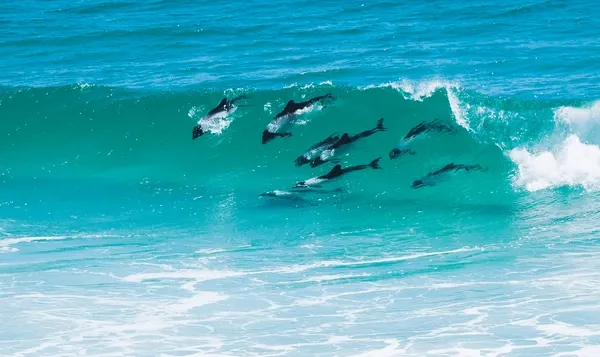
playful nature. This species has been known to surf waves, play with seaweed,
and even engage in play with other species, including humans. The playful
behaviour of these animals is not exclusively for the motif of entertainment;
it strengthens social skills in young dolphins and cements bonds within a pod.
Dolphin play is no mere frolic - it's a foundational force,
comprising up to 20% of their active time and spanning solo somersaults to
interspecies tag with seals or humpbacks. Bottlenose calves chase bubbles or
toss jellyfish like beach balls, while adults ride bow waves or invent "pogo-stick"
leaps, propelling vertically with tail slaps. In the Bahamas, pods incorporate
human swimmers into games, mirroring strokes or offering "rides," a
cross-species camaraderie rooted in curiosity. Object play evolves tools:
weaving bubbles into rings or balancing pufferfish like toys, behaviours that
2025 ethology links to stress relief and creativity.
The perks run deep. For juveniles, mock chases and
wrestle-play hone hunting agility and alliance-building, with 2024 Shark Bay
data showing playful males siring 2-3 times more offspring by adulthood, play
as prenatal prep for reproductive success. Socially, it forges resilience:
shared antics reduce cortisol, fortify empathy, and even resolve conflicts,
turning potential rivals into ride-or-die allies. In captivity, enrichment
mimicking wild play - via bubbles or mirrors- slashes stereotypic behaviours by
70%, affirming play's welfare role. Ecologically, it sparks innovation:
wave-riding scouts novel currents for food, while cross-species frolics expand
networks. Far from frivolous, dolphin play is evolutionary elixirinfusing joy
into the grind, binding pods in buoyant bliss, and reminding us that in the
wild's wisdom, laughter laps at learning's edge.
Protectors of the Sea: Dolphins and Conservation - Guardians Under Siege
Unfortunately, dolphins are confronted with a number of
different threats, ranging from pollution to fishing nets. For such amazing
animals, their homes also need to be protected. Conservation can help in this
matter. Organizations around the world work to implement policies and practices
that keep dolphin populations safe.
Dolphins teeter on a knife's edge: as of the 2025 IUCN Red
List, 26% of 92 cetacean specie - 24 in total - face extinction, with riverine
dwellers like the vaquita critically endangered at under 10 individuals.
Coastal bottlenose subpopulations, vital sentinels of ocean health, suffer
bycatch in gillnets claiming 300,000 cetaceans yearly, while vessel strikes and
noise pollution from shipping disrupt echolocation, slashing foraging
efficiency by 40%. Chemical cocktails - plastics leaching toxins, oil spills
tainting prey - trigger reproductive crashes, with microplastics detected in
80% of examined dolphins by 2025. Climate chaos compounds woes: warming waters
shift fish migrations, acidifying oceans erode shells in symbiotic diets, and
habitat fragmentation isolates pods, eroding genetic diversity.
Yet, hope surges through stewardship. The IUCN's Cetacean
Specialist Group, alongside NGOs like WWF and OceanCare, champions 247
Important Marine Mammal Areas (IMMAs) spanning 2025's hotspots from the Gulf of
California to the Black Sea, buffering against encroachment. Bycatch mitigation
- acoustic deterrents and turtle excluder devices - has revived local
populations by 25% in U.S. fisheries, while global bans on high-seas driftnets
under UN treaties curb ghost gear. Community-driven initiatives, like Indonesia's
2025 vaquita-inspired patrols, blend indigenous knowledge with tech: drone
surveillance and AI-monitored buoys flag threats in real-time. Captivity
critiques fuel wild-focus shifts; post-2019 laws in Canada and India prohibit
shows, redirecting funds to rehab centres that release 70% of strandings.
International pacts, including the 2025 CMS Resolution on marine noise, mandate
"quiet zones" around calving grounds. By amplifying these efforts - boycotting
polluters, supporting marine protected areas covering 30% of oceans by 2030 - we
don't just save dolphins; we safeguard the seas' soul, ensuring their songs
echo for eons.
Our Dolphins Fans: Dive In and Share the Splash
If you ever happen to be with the dolphins in the wild or
have watched those nature documentaries about them, then you know how much they
hypnotize. So amazing and entertaining, these animals show us the beauty and
brain that also exists in nature. Any experiences with dolphins that you will
never forget? Please share your stories or questions!
Sources
Insights into social pods, intelligence, play, and
conservation threats pull from marine biology and conservation sites.
- MarineBio
Conservation Society: Outlines self-awareness, problem-solving, and
social learning. Link
- Wild
Dolphin Project: Affirms mimicry, quick learning, and self-awareness. Link
- PMC/NIH
Study: Explores alliance relationships and brain size evolution. Link
- Dolphin
World: Details conservation threats like pollution and bycatch. Link
- ScienceDirect:
Discusses altruism, communication, and habitat influences on social
strategies. Link
- Whale
& Dolphin Conservation USA: Highlights problem-solving and
emotional complexity. Link
- Discover
Magazine: Describes fission-fusion societies and personalities. Link
- PubMed:
Predicts social strategies based on ecological conditions. Link
- IFAW:
Notes cognitive capacity, problem-solving, and conservation needs. Link
- Dolphin Research Center: Explains communication and social networks. Link
Comments (1)
Log in to join the discussion.
Log in
Researching and writing this was a profound experience, especially digging into the 2025 neurostudies. It’s one thing to know dolphins are smart, but learning about the sponging dynasties and the sheer impact of play on their survival really changed how I view intelligence outside of a digital or human context. Writing this reminded me why bridging the gap between hard data and emotional empathy is so vital for conservation. I think the dolphins signature whistles can change how anyone else perceives their social structures.