The Turtle That Crosses Borders
By Johnson Owino · October 10, 2026
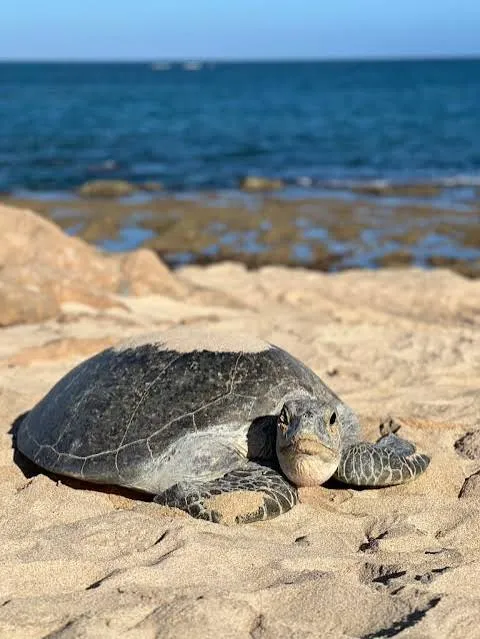
(Shared via Conservation Namibia. A solitary Green Sea Turtle resting on a sandy beach shore)
You know, when people say "green turtle,"
most of us probably picture some slow, ancient creature with a shell that's
actually green. Turns out, the shell is more like a mix of brown and olive. The
name actually comes from the fat inside their bodies, which gets a greenish
tint because they eat so much seagrass. And honestly, that diet is what
makes them pretty special.
These guys, scientifically known as Chelonia mydas,
are the biggest hard-shelled sea turtles out there. They can get pretty
massive, up to about a meter and a half long and weighing anywhere from 100 to
250 kilograms.
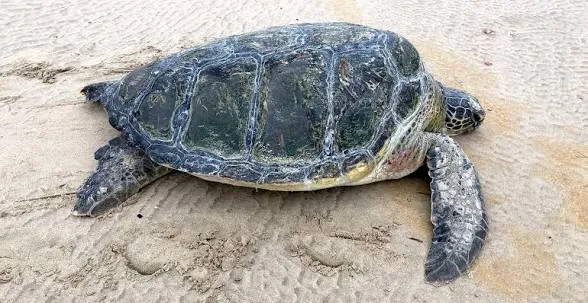
(Documented
through Ningaloo
Turtle Program
in Australia.A
high-angle view of a large adult female
Green Sea
Turtle.)
What's really unusual for sea turtles is that they're mostly
herbivores, munching on seagrass and algae. They kind of just drift around like
slow, armored lawnmowers.
It might sound simple, but it's a big deal
for the ocean. Those seagrass beds are like underwater daycares
for fish, they help break the force of storms, and they store a lot of carbon.
When green turtles graze, they keep these meadows healthy and growing.
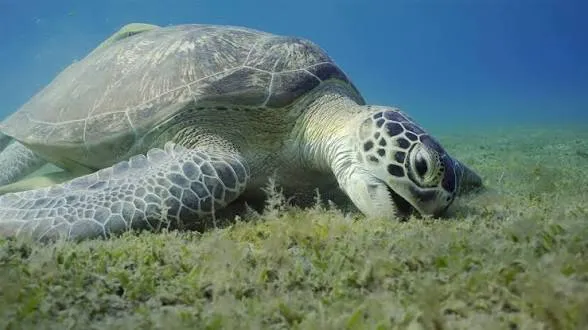
(An adult Green Sea
Turtle
(Chelonia
mydas)
grazing with an open mouth on a lush seagrass meadow.)
If they weren't
around, the whole underwater ecosystem would start to struggle. That's why
they're considered a keystone species – one type of animal basically
holding up an entire environment.
But maybe the most mind-blowing thing about
them is their sense of home. After spending years out in the open
ocean, the female turtles actually find their way back to the exact same beach
where they were born to lay their own eggs.
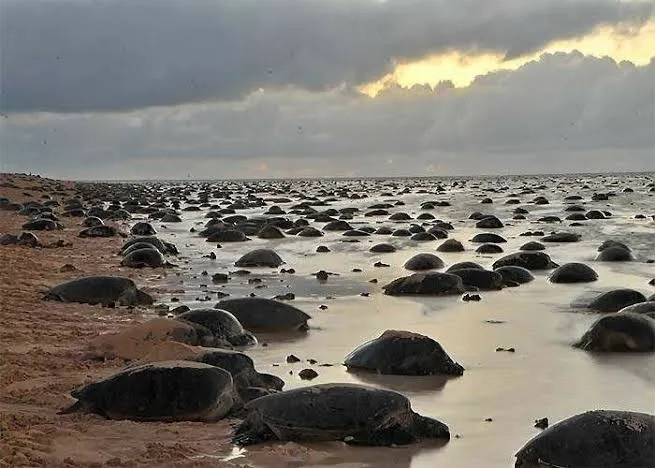
(This image depicts green sea turtles at Raine
Island, on the outer edge of the Great Barrier Reef in Queensland, Australia,captured
by researchers during the Raine Island Recovery Project.Thousands of female
green sea turtles crowding the sandy shores during a massive synchronized
nesting event (rookery)
Scientists think
green turtles have the strongest connection to their birthplace out of all sea
turtle species. We still don't quite get how they navigate across thousands of
kilometers; it's like they have a built-in GPS we're just starting to figure
out.
They don't grow fast and take a long time to
mature, often not breeding until they're anywhere from twenty to
fifty years old. This means any adult turtle lost is a really significant
blow to their population. And when the babies finally hatch, they face an
incredibly tough journey. Crabs, birds, fish, plastic debris, and even
artificial lights that lure them inland instead of towards the sea – it’s a
dangerous world for them right from the start.
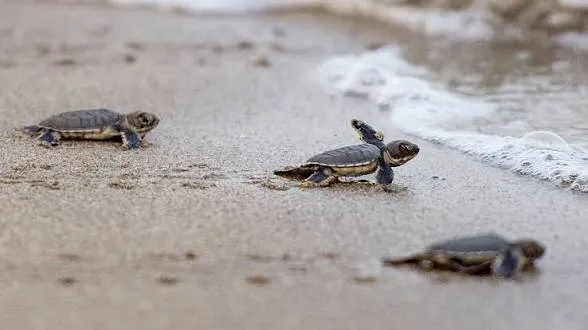
(Photo
by Oregon Coast Aquarium
.A group of small sea turtle
hatchlings making their initial
trek down to the ocean waves.)
There's also a less obvious problem happening in the sand
itself. The temperature of the sand where the eggs incubate actually
determines the sex of the hatchlings. Warmer sand tends to produce more
females, while cooler sand produces more males. In one study, the warmest
nests ended up with over 94 percent female hatchlings. As the beaches get
hotter, we're seeing more and more nests skewed towards females, which could
actually threaten their ability to reproduce in the future. It’s a stark reminder
that even a population that’s starting to recover isn't completely out of the
woods yet.
The green turtle is actually one of
conservation's quiet success stories, and it’s not something any
single country achieved alone. It’s a story involving around eighty
different nations working together. In 2025, the IUCN officially changed
the green turtle's status from Endangered to Least Concern globally. This
change only happened because their numbers have bounced back by about 28
percent since the 1970s.
This comeback was because of coordinated efforts to protect nesting
beaches, international bans on trade, and changes in fishing gear used all
across the turtle's range.
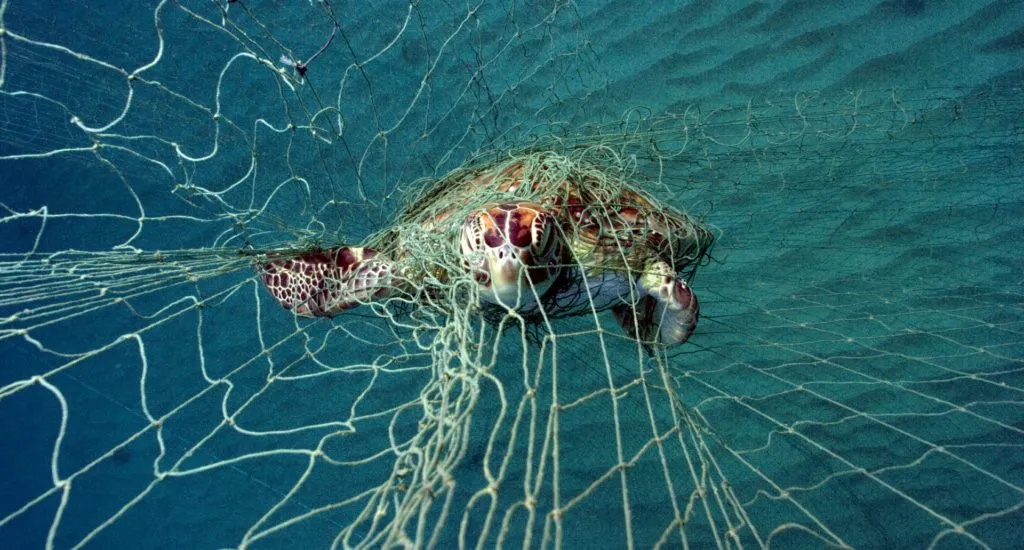
conservation
campaign photograph captured by Jordi Chias.
A sea turtle
entangled within a commercial ghost fishing net
underwater, highlighting the global threat of marine bycatch.)
That’s because a turtle that nests on one shore might feed
off the coast of a completely different country, and no single nation can truly
protect an animal that doesn’t pay attention to borders.
The main effort that kicked things off is still worth
celebrating. On Costa Rica's Caribbean coast, Tortuguero National Park is home
to the largest green turtle nesting ground in the Western Hemisphere. It's a
21-mile stretch of black sand that biologist Archie Carr brought to global
attention. Protecting that specific beach is incredibly important because
female turtles return to the same shore, generation after generation. If you
protect the nesting beach, you’re protecting the entire life cycle.
But Tortuguero is just one piece of the puzzle, not the
whole picture. Similar, patient protection efforts have been happening all
over the world. We see documented recoveries in places as diverse as the UK's
Ascension Island in the South Atlantic, Hawaii and Florida under NOAA's watch,
Mexico's Caribbean and Pacific coasts, Sabah and Terengganu in Malaysia, and
the Aldabra Atoll in the Seychelles in the Indian Ocean. Each of these is a
success in its own right, and together, they’re the reason the global status
has finally shifted.
That "Least Concern" label is a
global one, and it doesn't mean they're safe everywhere. Some
regional populations are still facing serious issues. Tortuguero itself has
experienced periods with fewer nests in recent years. The turtles that nest
there travel to feeding grounds where both legal and illegal hunting still
occur. Coastal development, warmer sand that leads to more female hatchlings,
and plastic pollution all mean these animals still require active management. The
global recovery is real and definitely worth celebrating, but it relies on
continued conservation. The moment the effort stops, those gains could
easily disappear.
Green turtles also nest along Kenya's
coastline. Here, community-based conservation projects, including
those around Watamu and the Diani/Wasini areas, combine nest protection with
ways for local people to make a living.
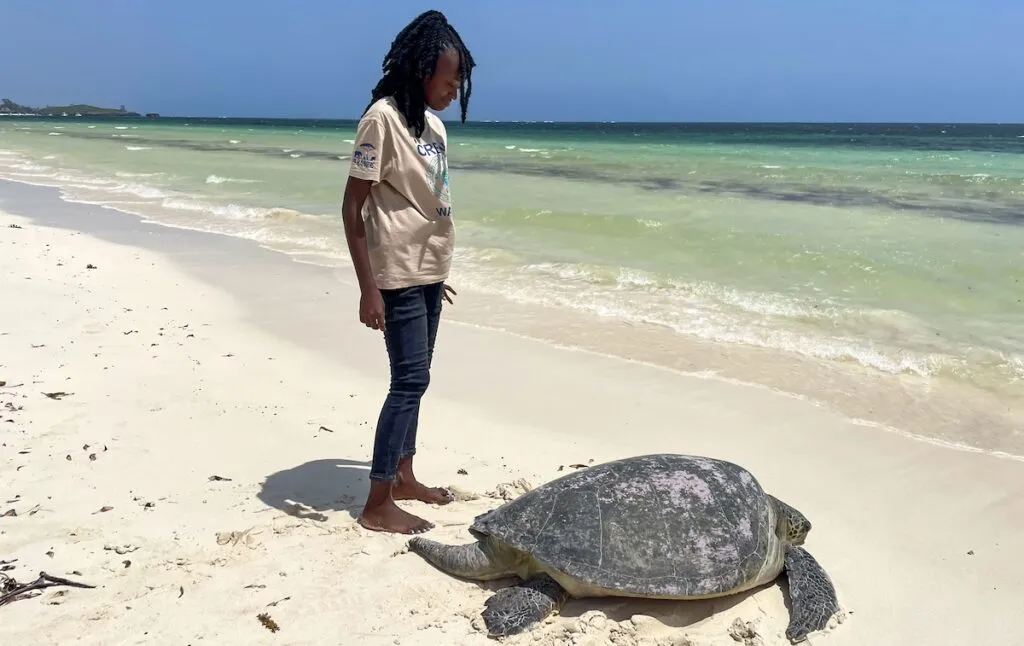
( Big3Africa
detailing the Local Ocean Conservation (LOC)
program along Kenya's coastline.
A conservationist supervising and monitoring a rehabilitated
Green Sea Turtle
as it is safely guided back down a beach.)
Fishermen who might have once taken turtle eggs now help
monitor the beaches. It's the same idea that worked so well in Costa Rica, just
applied here: conservation that works alongside people, not against them.
And that’s really the most sustainable approach.
The green turtle is like a gardener, a navigator, and a
living connection between generations of the same beach. Protecting them means
we’re also protecting seagrass, fisheries, coastlines, and the communities that
depend on them. It’s amazing how much one animal can contribute.
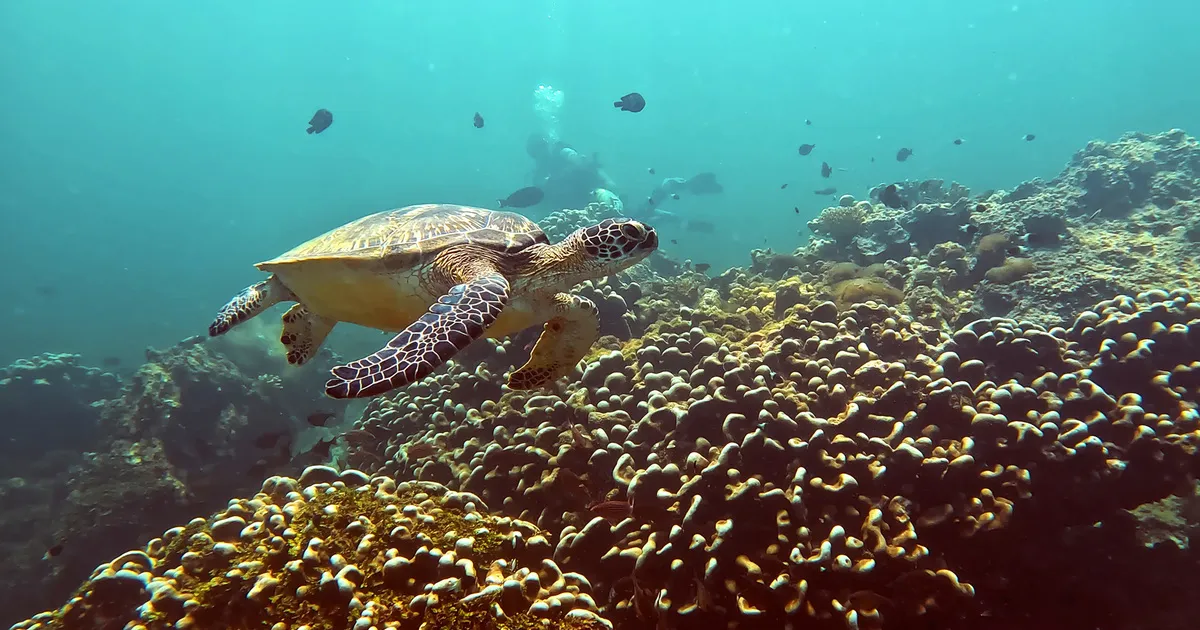
(Shared
by the Olive Ridley Project
in Kenya. A Green Sea Turtle
cruising underwater right alongside a sprawling, colorful coral reef formation.)
So, if you could pick one stretch of Kenyan coastline to
protect for the turtles, which beach would you choose and why? 🌊"
Comments (0)
Log in to join the discussion.
Log in