The Striped Ghost of Tasmania: THYLACINE
By Johnson Owino · May 5, 2026
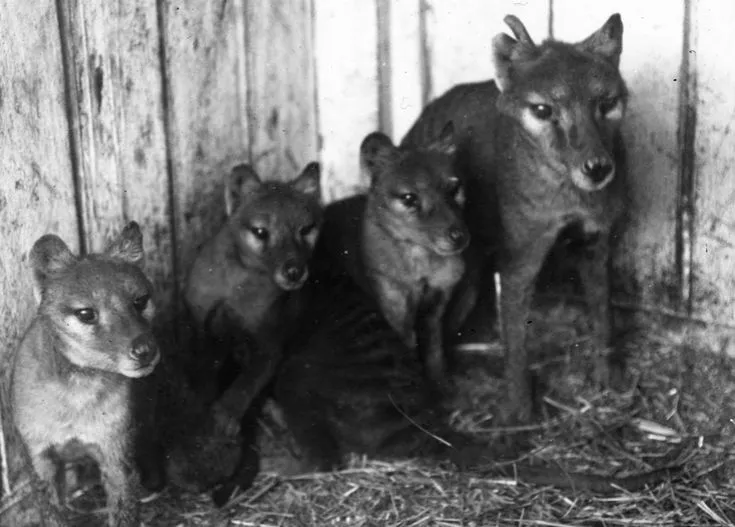
- ( National Zoo in Washington, D.C., United States (circa 1903). A historic black-and-white photograph capturing a female thylacine and her three juvenile pups huddled together inside a wooden enclosure.)
So you've met the Tasmanian Devil, the Eastern Quoll, and the adorable night-grazing Bennett's Wallaby. Time to close the series with the strangest, saddest, and most legendary creature of them all: the Thylacine — aka the Tasmanian Tiger.
🐅 What was it?
A marsupial that looked like a dog, had tiger stripes, and
could open its jaw 80 degrees (great for yawning, less great for fighting). It
was shy, nervous, and hunted alone at night. Despite its fierce name, it had
the bite force of a disgruntled house cat.
💔 What went wrong?
Blame us, mostly. European
settlers thought thylacines were sheep-killers (they weren't — feral dogs did
the real damage). A bounty was placed on their heads in 1888. By 1909, over
2,180 had been slaughtered. Add habitat loss, hunting of their natural prey,
and... that was it.
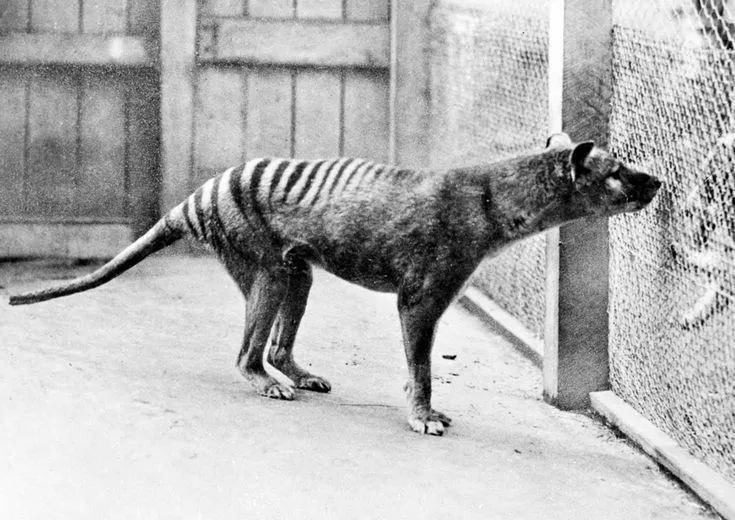
(Beaumaris Zoo (Hobart Zoo) in Tasmania, Australia (circa 1933).
A classic black-and-white historical photograph showing the last known captive thylacine standing in profile, sniffing the wire mesh fence of its concrete cage enclosure.)
The last wild thylacine was shot in 1930. The very last captive one died in Hobart Zoo on September 7, 1936, just two months after the government finally gave them legal protection. Oops. Too late.
🌍 Why it matters
The thylacine was Tasmania's top predator. When you remove
the apex predator, the whole ecosystem wobbles, like pulling the wrong Jenga
block. Wallabies overgraze, invasive species spread, and wildfires get worse.
Australia now has the world's worst mammal extinction record. The thylacine is
the poster child of that tragedy.
Could it come back?
Maybe. Scientists are trying to de‑extinct it . A company called
Colossal has sequenced 99.9% of its genome. Whether they should is another
debate, but wouldn't it be wild to see stripes in the bush again?
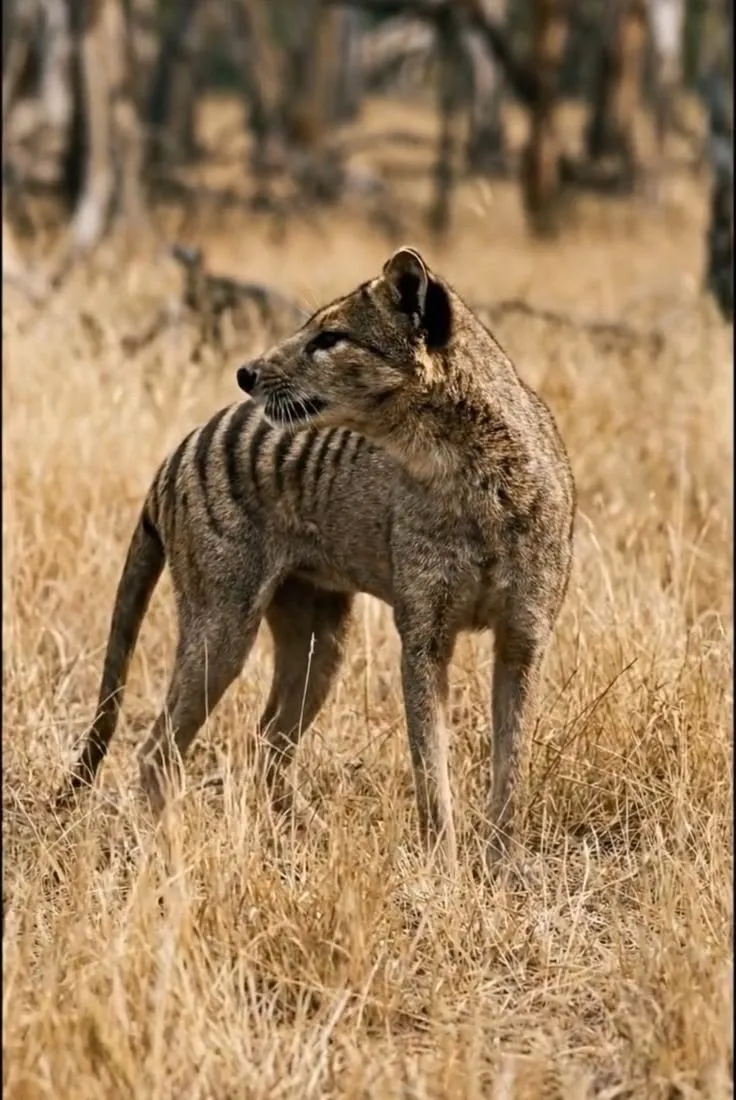
(Open woodland, Australia (depicting its native habitat).A modern digital reconstruction of a thylacine standing alert in a field of dry, golden grass, looking back over its left shoulder. It beautifully illustrates the sandy-brown coat and sharp dark stripes characteristic of the extinct marsupial predator.)
The thylacine was shy, weird,
and harmless, a gentle ghost that didn't deserve its fate. Today, it's a
reminder to protect what we still have. Because nothing breaks a heart quite
like learning an animal was wiped out just after we promised to save it.
Have you ever wondered what it would be like to see a
thylacine in the wild? Do you believe the de-extinction project will succeed?
Drop a comment below—I'd love to hear your thoughts and go hug a wallaby for me. 🦘💚
Comments (2)
Log in to join the discussion.
Log in
Such a heartbreaking but important reminder of how human actions can drive species to extinction.
Woishe😢 I hope they succeed. It would be really nice to have them around