The Painted Wolves of Africa: A Dog Day Tribute 🐾
By Johnson Owino · August 26, 2026
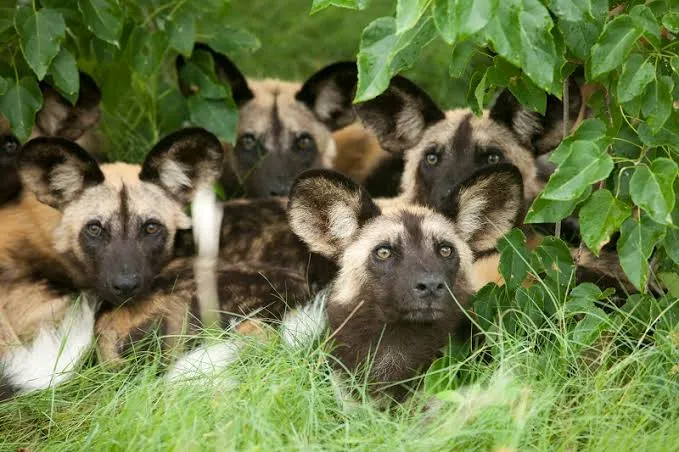
(African wild dog pups resting together looking over green foliage:Nature and Wildlife stock photography)
Happy International Dog Day! Today, we celebrate our
four-legged friends. But beyond our domestic companions, there’s
a wild canine that deserves our attention: the African wild dog.
They are a marvel of nature, a testament to the power of community, and a
species fighting for its very survival.
They ’re not actually dogs in the way you might think. Their scientific name, Lycaon pictus, translates beautifully to “painted wolf,” a reference to their uniquely mottled coats. Each one has a one-of-a-kind pattern of black, tan, and white, making them as individual as a human fingerprint.
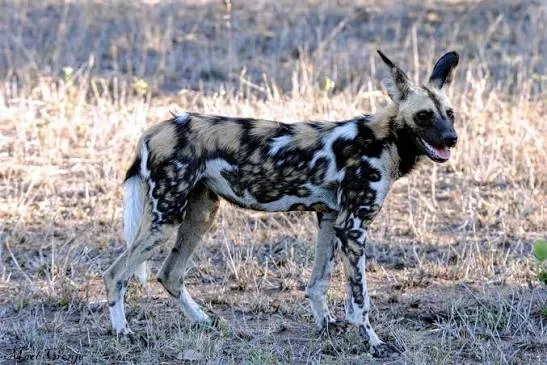
(An alert African wild dog stands in dry grass,
showcasing its stunning, high-contrast patchwork coat of black, tan, and white
blotches.Image SourcePhotograph by naturalist Marc Cronje, published on
Destination: Wildlife™.)
They are Africa’s largest canid species
standing about 65–80 cm at
the shoulder and weighing between 20–30 kg. Their most distinctive features
are their large, rounded ears, which act like satellite dishes to hear prey
from miles away, and their long legs, built for endurance. They also
have four toes on each front foot, unlike most other dogs, which have five.
African wild dogs are highly social animals,
living in packs that typically number 10 to 15 individuals, though groups of up
to 40 have been recorded. These packs are led by a dominant breeding pair, but
the structure is surprisingly cooperative. There’s very little aggression and the
pack functions as a single, highly efficient unit.
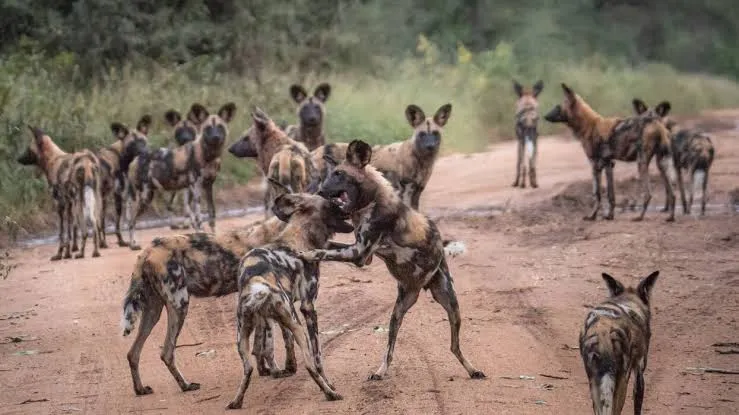
(Pack of African wild dogs gathered on a dirt road
in the bush.Members interact dynamically, showcasing their complex social bonds
through play-fighting and vocalization:African Wildlife Conservation.)
This cooperation is nowhere more evident than in their
hunting. They are considered one of the most successful predators on earth,
with an incredible success rate of around 80%.
Their hunting strategy is a masterpiece of teamwork and
endurance. Before a hunt, the pack engages in a “democratic” vote by sneezing.
The more sneezes, the more likely they are to head out on a hunt.
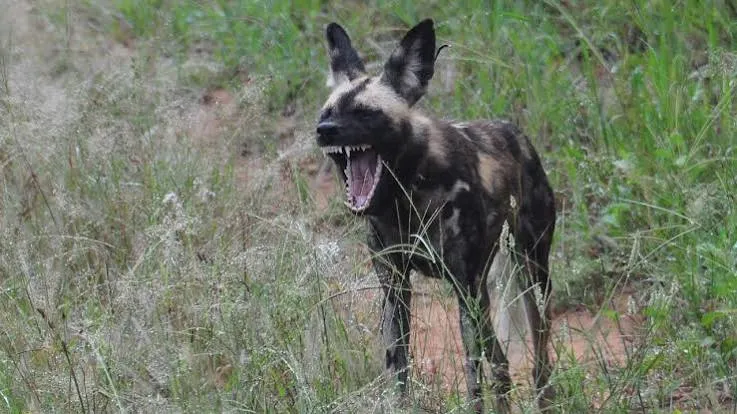
(African wild dog standing mid sneeze,captured during a behaviour known as social rally:Selinda Reserve in Botswana by photographer Beverly Joubert)
Once they begin, they chase their prey, often covering
several kilometres at speeds of up to 55–65 km/h. They take turns leading the
chase, allowing them to maintain high speeds over long distances until their
target collapses from exhaustion.
When a hunt is successful, the feeding begins by following a strict hierarchy. The alpha
pair eats first, then the pups, then the rest of the pack. The adults will
even regurgitate food for pups too young to join the hunt. This feeding
structure ensures the most vulnerable members get their share.
What is remarkable is how little fighting there is over
food. Unlike other predators where the strongest dominate, African wild dogs
rarely squabble. Their social bonds are so strong that they care for injured,
sick, or elderly pack members by sharing food with them. This level of
compassion is rarely seen in the animal kingdom and makes them truly unique.
African wild dogs help maintain a healthy
balance of prey species, preventing overpopulation and the
degradation of habitats. By targeting weaker individuals, they strengthen prey
populations and keep ecosystems in balance.
Despite their prowess, the future is uncertain. The
African wild dog is classified as Endangered. There are fewer than 7,000
individuals left in the wild. In Kenya, the situation is particularly alarming.
The latest wildlife census reports a devastating 51.9% decline in the African
wild dog population, with an estimated national adult population of just 310
individuals across 38 packs in 2025. This is down from 645 individuals in 2021.
A major factor in
Kenya has been an outbreak of canine distemper disease. Habitat loss and
fragmentation also brings them into conflict with humans,
Groups like the Endangered Wildlife Trust and
African Parks are actively moving wild dogs back to areas where they’ve
disappeared. Since these programs began, over 350 wild dogs in 35
packs have been reintroduced across southern Africa. A recent success was the
translocation of 20 wild dogs to Zimbabwe’s Matusadona National Park in 2026,
marking their return after decades of local extinction.
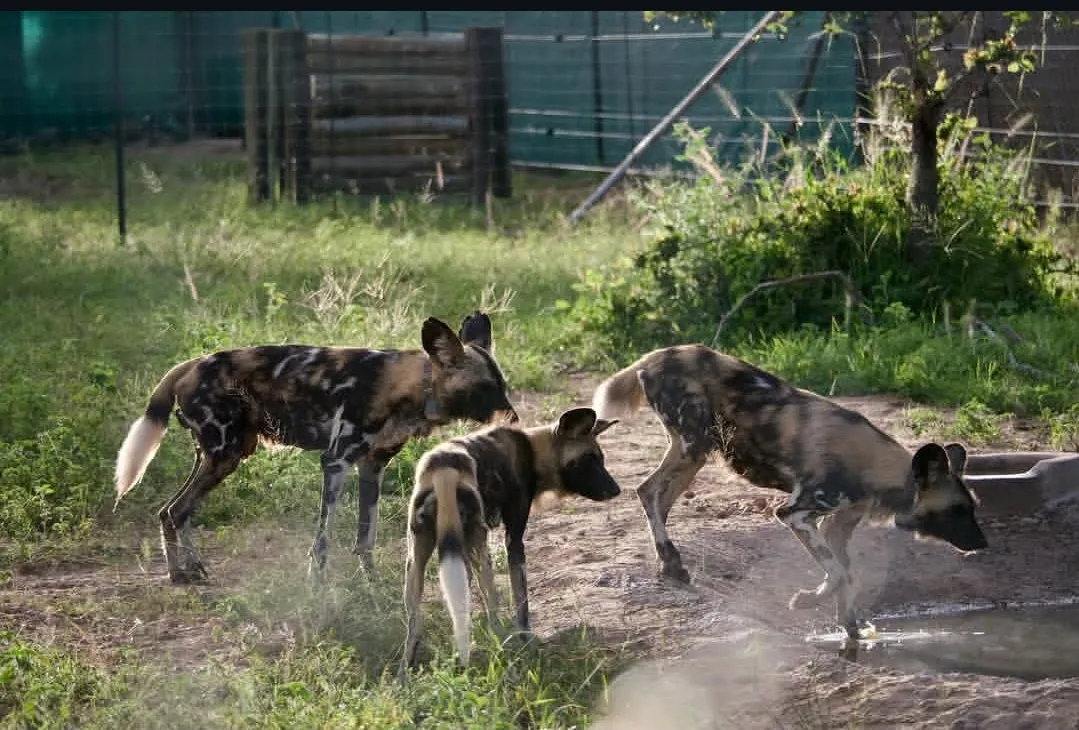
(Three African wild dogs (Lycaon pictus) stand on
dirt ground within a fenced rehabilitation:Matusadona Conservation. )
Conservationists even “mediate” to bond unrelated males and
females, forming new packs for release. Mixing dogs from different populations
also helps reduce inbreeding and strengthens the species’ genetic diversity.
Over 1.5 million hectares of habitat have been secured or
restored for wild dogs across Africa. Anti-poaching patrols, particularly in
places like Kenya’s Tsavo East National Park, have helped local populations
rebound.
Many wild dogs living outside protected areas are being monitored
using GPS-tracking comonit.This helps alert herders when packs are nearby, allowing
them to move livestock to safety. In northern Kenya, community engagement
turned local attitudes from only 10% positive towards coexistence to 70%
positive in just three years.
Diseases like rabies, spread by domestic dogs, pose a huge
threat.The Samburu-Laikipia Wild Dog Project vaccinates about 16,500
domestic dogs annually across nearly 5,000 square kilometers. In some
projects, vaccination coverage areas have expanded from under 6,000 km² to over
10,000 km², with zero wild dog deaths from disease during those periods. Plans
are also in place to directly vaccinate wild dogs in the future if recommended
by experts.
The fight to save the African wild dog is a comprehensive
one, blending habitat protection, community partnership, disease control, and
cutting-edge science.
If I had to choose the true “King of the
Jungle”My vote goes to the African wild dog hands down.
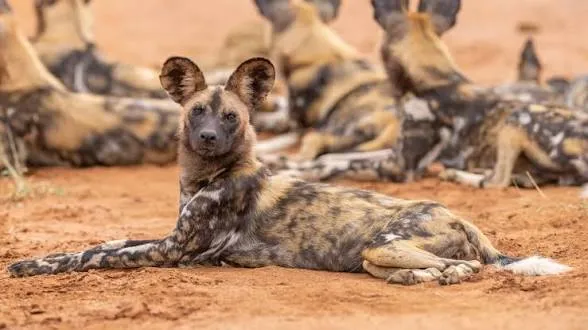
If we awarded the crown for efficiency, success rate, and
sheer resilience, the lion wouldn’t stand a chance. Lions are powerful, sure,
but they only succeed about 30% of the time and often steal kills.The
painted wolf is the real MVP. They hunt with pure precision, use
teamwork to confuse prey, and wear down victims over kilometres, not seconds.
Who has your vote?
Comments (0)
Log in to join the discussion.
Log in