The Downfall of a Crab Kingdom 🦀
By Johnson Owino · June 27, 2026
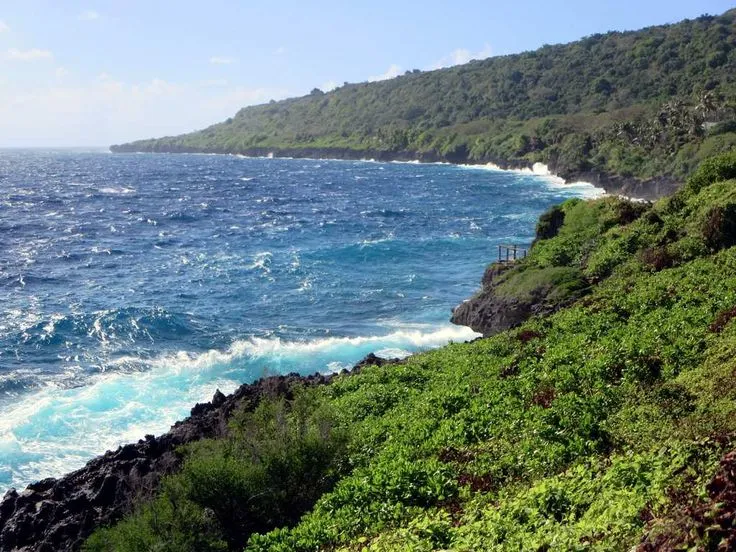
(Christmas Island. A crab utopia.A wide landscape view of the lush, green terrace forests and steep volcanic limestone cliffs of Christmas Island, meeting the rough blue waters of the Indian Ocean.Source: Geographic landscape photography database )
In the middle of the Indian Ocean, about 1500
kilometres off the coast of Australia, lies Christmas Island. It is a
place shaped not by humans, but by crabs. Every year, as the first heavy rains
of the wet season arrive, the island transforms. The forest floor begins to
move. Over 100 million red crabs emerge from
their burrows and march toward the sea. It is one of the greatest migrations on
Earth. A sea of red spilling over roads, homes, schools, and beaches.
Tourists fly from around the world to witness it. Locals carry rakes and
leaf blowers in their cars to help the crabs cross the road safely. For a few
weeks, Christmas Island belongs entirely to the crabs.
But for years, this crab utopia was under siege. Not by poachers, not by climate change. By ants. Tiny, yellow, acid-spraying ants.
The Invader
Yellow crazy ants arrived on Christmas Island sometime in
the first half of the 20th century, probably hidden in cargo. No one knows
exactly where they came from. But on Christmas Island, they found paradise:
no natural predators, abundant food, and a climate that suited them perfectly.
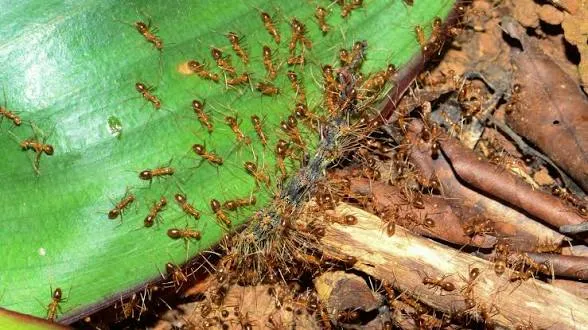
(A dense swarm of
invasive yellow crazy ants (Anoplolepis gracilipes) actively foraging and
aggregating across a bright green leaf and dry twigs on the forest
floor.Source: Invasive species research database )
Without anything to stop them, the ants multiplied into
super-colonies covering hundreds of hectares, up to 1000 ants per square metre.
They spread across the island like a yellow tide, consuming everything in their
path. The name "crazy ant" comes from their frantic, erratic movement
when disturbed. But there is nothing funny about what they do to crabs.
Yellow crazy ants are armed with formic acid,
one of nature's most powerful acids. When a red crab crosses
their path, the ants swarm over it and spray acid directly into the crab's
eyestalks blinding the crab. Blinded and confused, the crab is doomed. The ants
then spray acid into the crab's leg joints, immobilising it. The crab is left
to die of dehydration, sometimes torn apart piece by piece.
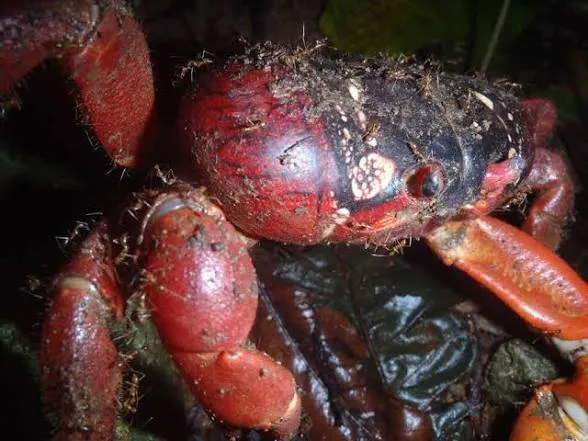
(A Christmas
Island red crab suffering an attack by a multitude of yellow crazy ants
swarming its carapace, eyes, and joints.Source: Ecological threat documentation
)
For millions of years, red crabs on Christmas Island had no
natural predators. They evolved in relative peace, isolated from the rest of
the world. They never developed defences against an invader like this. When the
crazy ants arrived, the crabs had no defence. Since the late 1990s, the
invasive ants have killed tens of millions of land crabs on Christmas Island.
At one point, the red crab population dropped by two-thirds. The most severe
losses wiped out an estimated 10 to 15 million red crabs.
Crabs are gardeners and caretakers of the island’s ecosystem. The island's entire rainforest depends on them. They eat their way through tonnes of leaf litter, fruits, seeds, and seedlings, returning vital nutrients to the soil. Without them, the rainforest suffers.Trees struggle,seedlings choke under leaf litterand other species decline. The whole ecosystem begins to unravel.
The crabs also migrate to the sea to breed. The females carry up to
100,000 eggs. After the female crabs release their eggs into the ocean, the
eggs drift as larvae for about a month before returning to land as tiny crabs.
Those baby crabs then march back into the forest, continuing the cycle. Of all the species that have become extinct in recent
years, around 80% have been islanders. Isolated communities may evolve for
millions of years in relative peace, but when new challenges arrive, they can
struggle to cope. For these red crabs, the journey to the sea has never been
more dangerous.
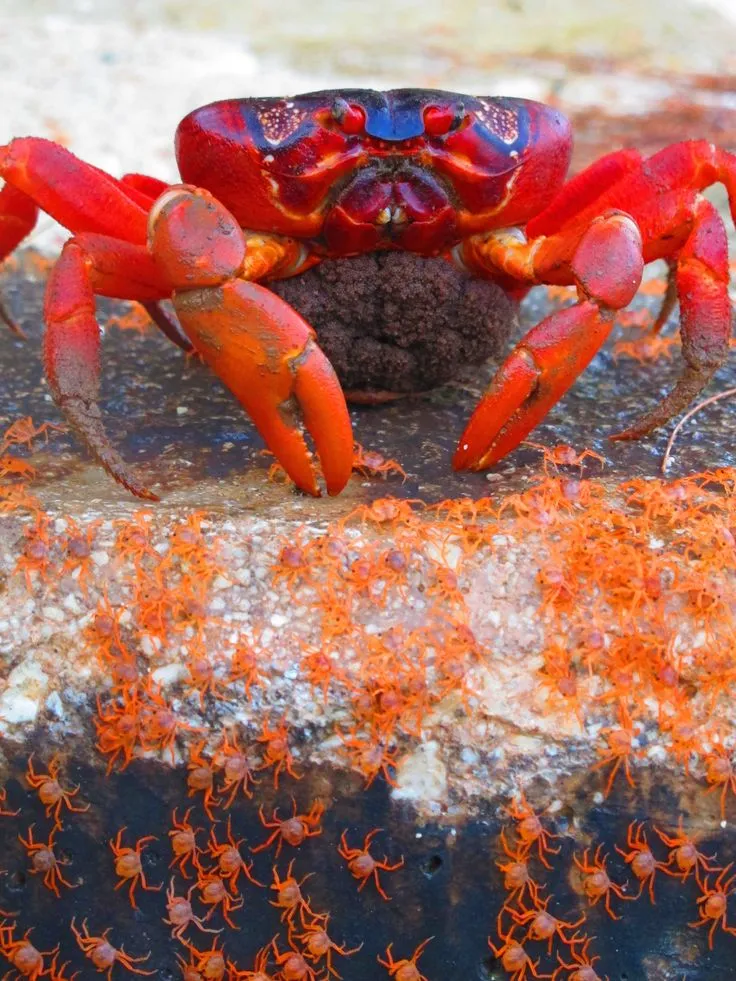
(An
adult female Christmas Island red crab (Gecarcoidea natalis) perched on a
concrete ledge, completely surrounded by thousands of tiny, orange baby crabs
crawling up from the coast after developing in the ocean.Source:
Christmas Island National Park conservation media.)
By 2015, it was clear that something drastic
had to be done. Aerial baiting with insecticide was expensive,
labour-intensive, and only a temporary solution. The ants would always move
back from remote parts of the island. So scientists tried something
different. In 2016, they introduced a tiny
Malaysian micro-wasp. These wasps are about 2 millimetres long. They
don't sting humans or harm native wildlife. Instead, they target the yellow lac
scale insect, a pest that produces honeydew which the crazy ants rely on as a
food source. The wasps kill the lac scale by laying eggs inside them. This is
called biocontrol, using one species to control another.
The micro-wasps have done a
fantastic job. According to Brendon Tiernan, Christmas Island National Park's
senior field program co-ordinator, they've successfully suppressed the lac
scale insect. But the war isn't over. The ants have found other food sources.
Parks Australia has led several other key interventions.
Drone technology has
been used to strike yellow crazy ant super-colonies, dropping insecticide
across dense rainforest and rangers also lay poison bait by hand and from
helicopters. The Australian government has invested millions of dollars for
projects like helicopter drone strikes and ongoing biosecurity efforts. Community involvement has also been crucial. Locals
avoid driving during peak migration times, and even work from home to give the
crabs safe passage.
Chris Bray, owner of Swell Lodge, developed a contraption
attached to the front of vehicles that gently steers crabs out of harm's way.
Despite the ongoing battle, the
red crabs are making a remarkable recovery. In the early 2000s, the population
was estimated at about 55 million. By 2025, red crab numbers could be breaching
the 180 million mark, a phenomenal recovery in just 10 years. Bumper years of
returning baby crabs have helped boost the numbers. Scientists aren't entirely
sure why some years produce more survivors than others. The eggs are at the mercy of ocean currents and
predators once they're released into the sea. But on special years, when
the weather and currents are just right, millions of baby crabs return to the
island in record numbers.
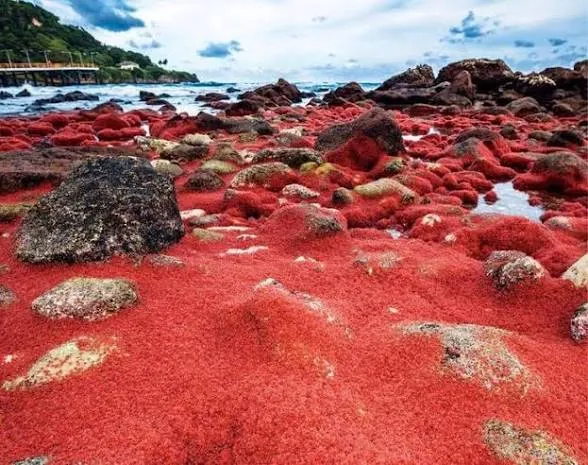
(A rocky coastline
blanketed by millions of tiny megalopae (baby red crabs) returning to
the shore from the ocean.Source: Parks Australia)
Climate change such as warmer waters and
shifting weather patterns could disrupt crab eggs and the survival of baby
crabs. The migration is triggered by the first heavy rains of the
wet season, usually around October or November. But changes in ocean
conditions, such as a negative Indian Ocean Dipole, can push that timeline
earlier than usual.
What Do You Think?
Will the red crabs have to evolve and adapt? Or is that too
slow a process for a species under siege from an invader it never evolved to
resist? Are we doing enough to control the yellow ants?
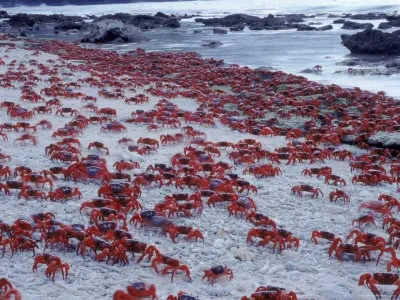
(
A massive army of red crabs blanketing a white coral-rubble beach as they
successfully reach the shoreline to begin their breeding and spawning cycle in
the sea.Source: Natural history documentary)
The red crabs have survived an invasion of acid-spraying
ants and the loss of two-thirds of their population. They've clawed their way
back to 180 million strong. But the war isn't over. The ants still exist on the
island. They've simply been suppressed, not eradicated.
Humans are responsible for
this imbalance. The ants were brought to the island by accident, hidden in
cargo. It’s a reminder that our actions, even unintentional ones, can have
devastating consequences for isolated ecosystems.
The next time you hear about an invasive species, remember
Christmas Island. A crab,an ant a wasp and forest that nearly collapsed
without its smallest engineers. 🦀
Comments (1)
Log in to join the discussion.
Log in
Aaaww, happy for them
Same! They've been through a lot. Glad the story has a brighter chapter now.