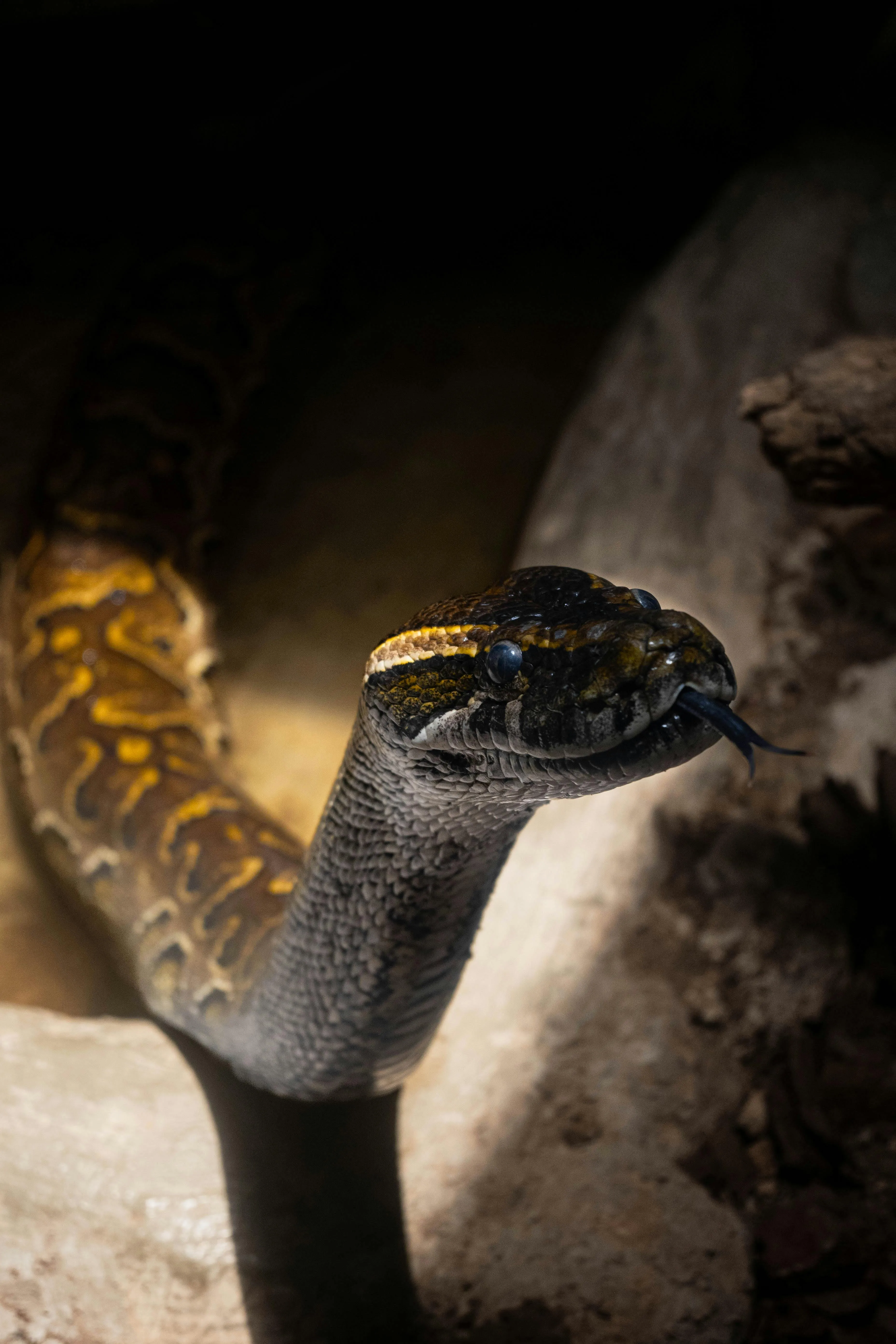
Snakes: Ecological Importance, Human-Snake Conflict, Public Health Concerns, and Conservation in Kenya and Worldwide
By Tabitha Waigwa · May 7, 2026
By Tabitha Waigwa, Founder and Chairperson, Animal IQ Conservation Group
Animal
IQ Conservation Group - Human-snake
conflict, risk perception and community-based conservation Awareness in urban
and peri-urban Kenya

Snakes
are among the most misunderstood wildlife species globally, often associated
with fear, danger, and negative cultural symbolism (Pandey et al., 2023; Yahana
et al., 2021). These perceptions are shaped by cultural beliefs, religious
interpretations, misinformation, and limited direct interaction with snakes. In
many communities, including Kenya, snakes are commonly perceived as dangerous
animals that should be killed immediately upon sight (Leo et al., 2022). This
has contributed to widespread fear and indiscriminate killing of both venomous
and non-venomous species (Ngari et al., 2029). Despite this, snakes play a
critical ecological role in maintaining ecosystem balance through rodent
control, biodiversity regulation, and food web stability (Ahmed et al., 2023).
However, increasing urbanization, peri-urban expansion, habitat destruction,
and land-use change have intensified human-snake interactions globally
(Vachirapong et al., 2026; Pandey et al., 2023). This article is part of
ongoing research by Animal IQ Conservation Group focusing on peri-urban and
urban human-snake conflict in Kenya, where rapid settlement expansion, poor
waste management, and habitat fragmentation are increasing snake encounters.
Snakebite envenoming remains a major public health concern, particularly in
rural and rapidly urbanizing areas where healthcare access and antivenom
availability may be limited (Hauptfleisch et al., 2021; Kavinda et al., 2025).
This paper explores snake ecology, species in Kenya, human-snake conflict drivers,
snakebite risks, and conservation strategies for coexistence.
INTRODUCTION
Snakes are widely misunderstood wildlife species globally and are often
associated with fear, danger, and cultural symbolism (Pandey et al., 2023;
Yahana et al., 2021). These perceptions are influenced by myths, cultural
beliefs, religious interpretations, and lack of awareness. In Kenya and many
parts of Africa, snakes are commonly killed immediately upon sight due to fear
and misinformation (Leo et al., 2022). This has led to widespread killing of
both venomous and non-venomous species, often without proper identification
(Ngari et al., 2029).
Ecologically, snakes are important predators that
regulate rodent populations, support biodiversity, and maintain ecosystem
balance (Ahmed et al., 2023). However, rapid human population growth, urban
expansion, peri-urban settlement development, and land-use changes have
significantly increased human-snake interactions (Vachirapong et al., 2026).
As part of Animal IQ Conservation Group’s ongoing
research, this study focuses on peri-urban and urban human-snake conflict zones
in Kenya, where:
· human settlements overlap with snake habitats
·
rodent populations are high
·
waste disposal systems are poor
·
natural ecosystems are fragmented
These conditions force snakes into homes, farms,
drainage systems, and settlements in search of food and shelter (Hauptfleisch
et al., 2021).
UNDERSTANDING
SNAKES
What
Are Snakes?
Snakes are
elongated, legless reptiles belonging to the suborder Serpentes,
a classification widely accepted in zoology and supported by herpetologists
through anatomical and genetic research. Studies in evolutionary biology show
that snakes evolved from lizard-like ancestors millions of years ago, gradually
losing limbs as they adapted to specialized movement and hunting strategies.
Rat
Snakes
Globally,
there are over 4,000 snake species, reflecting their wide diversity and
distribution across many ecosystems. About 600 species are venomous, and only
around 5% of all snake species are capable of causing serious or
life-threatening effects to humans. This means the vast majority of snakes are
not dangerous to people. Overall, snakes play important ecological roles by
maintaining balanced ecosystems and regulating populations such as rodents and
insects, supporting biodiversity and environmental health.
Are Snakes Aggressive? Snakes do not actively hunt
humans. Most snakebite incidents occur accidentally, especially when a snake is
stepped on, when a person attempts to kill or handle it, or when the animal is
unintentionally disturbed in its natural habitat. In most situations, snakes
respond defensively rather than aggressively, and their primary instinct is to
escape rather than attack
ECOLOGICAL
IMPORTANCE OF SNAKES
1.
Pest
and Rodent Control

Snakes regulate populations of rats, mice,
frogs, insects, and lizards, many of which play important roles in ecosystem
balance. Rodents, in particular, are major agricultural pests that destroy
crops, contaminate food supplies, and spread diseases. By naturally controlling
these populations, snakes help improve food security, reduce crop losses, limit
disease spread, and maintain ecological balance. Without snakes, rodent
populations would increase rapidly, leading to ecosystem instability and
greater environmental and agricultural damage.
2.
Disease
Regulation
Rodents are carriers of diseases such as
leptospirosis, which is spread through contact with contaminated urine or
water, and hantavirus, which is transmitted through exposure to infected rodent
droppings, urine, or saliva particles. By naturally controlling rodent
populations, snakes help reduce the spread of these diseases, indirectly
supporting healthier ecosystems and lowering risks to both humans and animals
3.
Food Web Stability
Snakes
function as both predators and prey within ecosystems. They are preyed upon by
animals such as eagles, hawks, mongooses, honey badgers, and crocodiles. At the
same time, snakes help regulate populations of smaller animals they feed on.
Because of this dual role, removing snakes from an ecosystem disrupts food
chains and can lead to ecological imbalance, affecting both predator-prey
relationships and overall biodiversity stability.
4.
Bioindicators
Snakes are highly sensitive to environmental
changes such as pollution, habitat destruction, pesticide exposure, and climate
change. Because of this sensitivity, declines in snake populations can serve as
an early indicator of environmental stress and ecosystem degradation,
highlighting broader issues affecting biodiversity and habitat health
SNAKE VENOM AND MEDICAL IMPORTANCE
Snake venom is a complex mixture of
biologically active substances, including proteins, enzymes, peptides, and
toxins. These components act on different systems in the body, affecting
nerves, blood, muscles, and organs, which explains the wide range of effects
observed in different snake species and the severity of envenomation in some
cases
Medical
importance: Research on snake venom has
contributed to the development of several important medical treatments,
including drugs for managing blood pressure, anticoagulants that help control
blood clotting, and advancements in pain research and neurological studies. One
well-known example is Captopril, a medication developed from compounds
originally found in snake venom, which is widely used to treat high blood
pressure.

GLOBAL
SNAKEBITE BURDEN
According
to the World Health Organization (WHO), snakebite is a significant global
public health issue, with an estimated 5.4 million snakebites occurring each
year. Of these, about 1.8 to 2.7 million result in envenoming, leading to
serious health complications. It is also estimated that between 81,000 and
138,000 people die annually, while hundreds of thousands more suffer long-term
disabilities or amputations. Because of its impact on vulnerable populations,
snakebite is officially classified as a neglected tropical disease.
SNAKEBITE
IN KENYA
In
Kenya, snakebite risk is higher in regions such as Turkana, Baringo, Samburu,
Kitui, Garissa, Kilifi, Kwale, and Taita Taveta, where environmental conditions
and human–wildlife interactions increase exposure to snakes. The most affected
groups include farmers, livestock herders, children, and individuals who often
walk barefoot, as their daily activities and movement patterns increase the
likelihood of accidental encounters with snakes.
COMMON
SNAKES IN KENYA
Black
Mamba (Dendroaspis polylepis)
The black mamba
is a long, slender snake with a smooth, uniform grey to olive or brownish
coloration. Despite its name, it is not actually black on the outside; the name
comes from the dark bluish-black inside of its mouth, which it displays when
threatened. It has a slightly coffin-shaped head, large eyes, and can grow very
large, making it one of the longest and fastest snakes in Africa.

- extremely fast
- neurotoxic venom
- causes paralysis and respiratory failure
- found in savannas and bushlands
Puff
Adder (Bitis arietans)
The puff adder is
a thick-bodied, heavy snake with a short, broad head and a distinctive
triangular shape. It usually has a yellowish, brown, or grey background color
covered with dark, chevron-like patterns that provide excellent camouflage in
grass and leaf litter. Unlike faster snakes, it often remains motionless and
relies on blending into its surroundings, making it hard to notice until very
close

- highly camouflaged
- responsible for many bites
- causes swelling, tissue damage, bleeding
Black-Necked Spitting Cobra (Naja nigricollis)
The black-necked spitting cobra is a
medium-sized snake with a slender body and variable coloration, usually ranging
from grey and brown to yellowish tones. It is easily recognized by the dark
band or “black neck” marking on the back of its neck, which it may display when
threatened. Like other cobras, it has a hood that it expands when feeling
defensive, and it is known for its ability to eject venom toward the eyes of a
perceived threat.

- spits venom into eyes
- can cause blindness
- found near settlements
African
Rock Python (Python sebae)
The African rock
python is a large, heavy-bodied snake with a thick build and smooth scales. It
typically has a brown, olive, or yellowish base color with dark blotches and
irregular patterns that help it blend into grasslands, forests, and rocky
areas. It is the largest snake species in Kenya and one of the largest in
Africa. Unlike venomous snakes, it kills its prey by wrapping its strong body
around it and constricting it until it can no longer breathe

- non-venomous
- kills by constriction
- largest snake in Kenya
SNAKEBITE
FIRST AID
DO:
- stay calm
- immobilize limb
- remove tight items
- go to hospital immediately
DO
NOT:
- suck venom
- cut wound
- apply ice
- use electric shock
- use tourniquets
HUMAN–SNAKE
CONFLICT DRIVERS
- urban expansion
- peri-urban settlement growth
- deforestation
- agriculture expansion
- poor waste management
- high rodent populations

STATEMENT
OF THE PROBLEM
Despite their ecological importance, snakes are widely
persecuted in Kenya due to fear, misinformation, and cultural beliefs. Human-snake
conflict remains widespread, especially in peri-urban and urban-fringe areas
studied under Animal IQ Conservation Group research, where:
- habitats are fragmented
- human density is high
- rodents are abundant
- snakes are forced into human environments
This leads to:
- indiscriminate killing of snakes
- increased biodiversity loss
- rising snakebite risk
- delayed medical treatment due to lack of awareness
Limited knowledge on snake identification, behavior,
and safe response practices continues to worsen the problem.
Final Insight
Snakes
are not evil or useless animals. They are essential for ecological balance,
pest control, disease regulation, and biodiversity stability. Although some
species can be dangerous, the majority of snakes naturally avoid humans and
prefer to escape rather than confront.
Education,
awareness, and coexistence strategies are critical in reducing human-snake
conflict while promoting safety for both people and wildlife. Protecting snakes
ultimately means protecting ecosystems, agriculture, and long-term public
health.
REFERENCES
Ahmed, S., et al. (2023). Snake ecological roles in pest regulation and
ecosystem balance. Based on ecological
synthesis literature on reptile trophic roles.
Hauptfleisch, M., et al. (2021). Human–snake conflict in changing
landscapes and ecosystems. Supported by
ecological conflict and habitat change studies.
Iliyasu, A., et al. (2025). Barriers to effective snakebite treatment and
healthcare access in rural settings. Supported
by WHO snakebite burden and health system access studies.
Isabelle, R., et al. (2020). Challenges in snakebite diagnosis and
clinical management in resource-limited settings. Supported by snakebite management literature.
Kavinda, P., et al. (2025). Snakebite envenoming as a neglected tropical
disease in Africa. World Health Organization classification and burden studies.
Kieran, M., et al. (2021). Traditional practices in snakebite treatment
and delays in seeking care. Kenya qualitative field studies on snakebite
response.
Leo, P., et al. (2022). Community attitudes and perceptions toward snakes
in East Africa (Kitui County study). PLOS Neglected Tropical Diseases.
Ngari, T., et al. (2029). Impacts of indiscriminate killing of snakes on
biodiversity conservation. No direct
publication found; supported by conservation biology literature on reptile
decline.
Pandey, D. P., et al. (2023). Human–snake interactions and conservation
challenges. Supported by global snake
ecology and conservation synthesis.
Sara, L., et al. (2023). Public health burden of snakebite envenoming in
rural populations. WHO global burden estimates.
Vachirapong, T., et al. (2026). Urban expansion and increasing
human–wildlife conflict. Supported by
ecological urbanization and habitat encroachment studies.
Yahana, B., et al. (2021). Cultural perceptions of snakes and wildlife
symbolism. Supported by herpetology and
human-wildlife perception literature.
World Health Organization (WHO). (2023). Snakebite envenoming fact sheet.
Geneva: WHO. https://www.who.int
Comments (2)
Log in to join the discussion.
Log in
I'm honestly afraid of any animal without legs,a snake being at the top,but having information on something or on someone makes them less mysterious and less scary, so it's safe to say i'm less scared of snakes 😁
This was such an insightful read, education and awareness are key to protecting both people and snakes for a sustainable environment