Madagascars Exploding Mom:A love story of a chameleon’s ultimate sacrifice. 🦎
By Johnson Owino · May 27, 2026
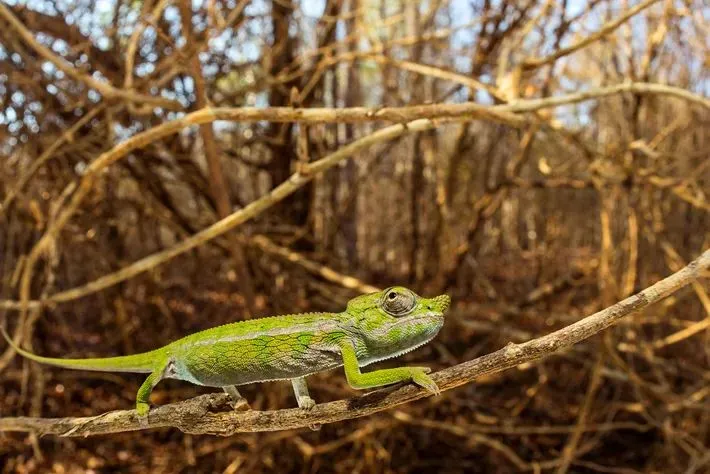
(Dry deciduous forests of Western Madagascar.Male Furcifer labordi; bright green body, white lips, a distinct white lateral stripe, and a small, upward-pointing nasal appendage.)
Meet the Chameleon Mom Who Explodes in a Rainbow (Literally)
You think your mom sacrificed a lot? Let me introduce you to
the female Labord's chameleon. She lives fast, dies young, and on her way out,
she turns into a disco ball — no exaggeration.
Her Life: A 4-Month sprint
This tiny lizard hatches in November when the Madagascar
rains arrive, and she has until March to get everything done. That's it. In
that time, she has to grow up, find a boyfriend, make babies, and lay her eggs.
No college years, no gap year in Bali — just a straight sprint from birth to
motherhood.
She grows almost 2.5 millimeters per day, which is like a
human baby reaching adult size in a few weeks. Her whole existence is on fast‑forward. By
January she's pregnant, and she spends February stuffing her face — not for
herself, but for her eggs. She doesn't rest, she doesn't play, she just works.
Then she digs a hole, lays about eleven eggs, covers them up
carefully, and…
And Then Everyone Dies
Together 💀
Here's the part most people don't know: the females don't
die alone. At the end of the rainy season — around March or April — every
single adult Labord's chameleon dies all at once. The males start falling from
the trees first, their grip weakening as they lose about a gram of body weight
every three days. Then the females join them. Within a few weeks, the entire
adult population is gone. No stragglers, no survivors — just silence.
For the next eight months, the species essentially doesn't
exist above ground. The only thing left is their eggs, buried in the sand,
waiting for the next rainy season to trigger another simultaneous hatch. It's
one of the most bizarre survival strategies in the whole animal kingdom.
That's When the Party Starts 🎆
Within hours of laying her eggs, the female's body gives up.
But for the next two hours, her skin goes
absolutely crazy — flashing red, purple, blue, yellow like a broken neon sign.
Scientists caught this on camera and their jaws dropped.
So what's happening? Is she
saying goodbye in rainbow? Nope — it's even weirder. Her nervous system is
still firing random signals to the special color‑changing cells in her skin, called chromatophores (try saying
that three times fast). Without her brain coordinating them, they just go
haywire — random expansions, random colors, pure chaos. But it's chaos that
looks like art. One scientist said it was "as if uttering her last
words" in color.
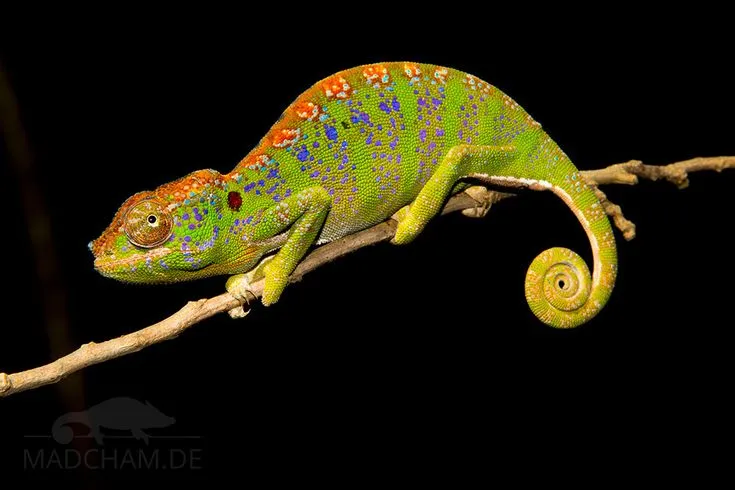
(Central Highlands of Central Madagascar.Female Furcifer minor; highly vibrant green base densely patterned with bright blue and purple spots, yellow-orange bands, and an orange-red casque.)
Sad?Or Just Badass?
You could cry for her. She never meets her babies, and she
lives less time than a Netflix subscription. Let’s be real, I think she's a
legend. She didn't die of old age — she died of giving everything. No regrets,
no leftovers. Just eggs, then dirt, then a glorious color explosion.
And here's the thing: her species has been
doing this for millions of years. Every single adult burns out together so the
next generation can hatch all at once when the rains return. That's not tragedy
— that's a hardcore family tradition, and the most synchronized exit in nature.
Why We Should Care (Even If youbhate lizards)
Chameleons are nature's pest control. They eat the bugs that
would otherwise destroy forests — no chameleons means too many bugs, and dead
trees.
The Labord's chameleon lives
only in one tiny corner of Madagascar, and deforestation is creeping in. She's
already listed as vulnerable. If she disappears, we don't just lose a rainbow‑exploding mom — we lose a piece of a puzzle that took nature
forever to build.
So Here's to Mama Chameleon💚
Her story isn’t one of loss, but of design —an existence
shaped perfectly for its environment. In the end she doesn’t simply fade away,
she becomes color, as if nature itself allows her to leave in one final
brilliant moment.
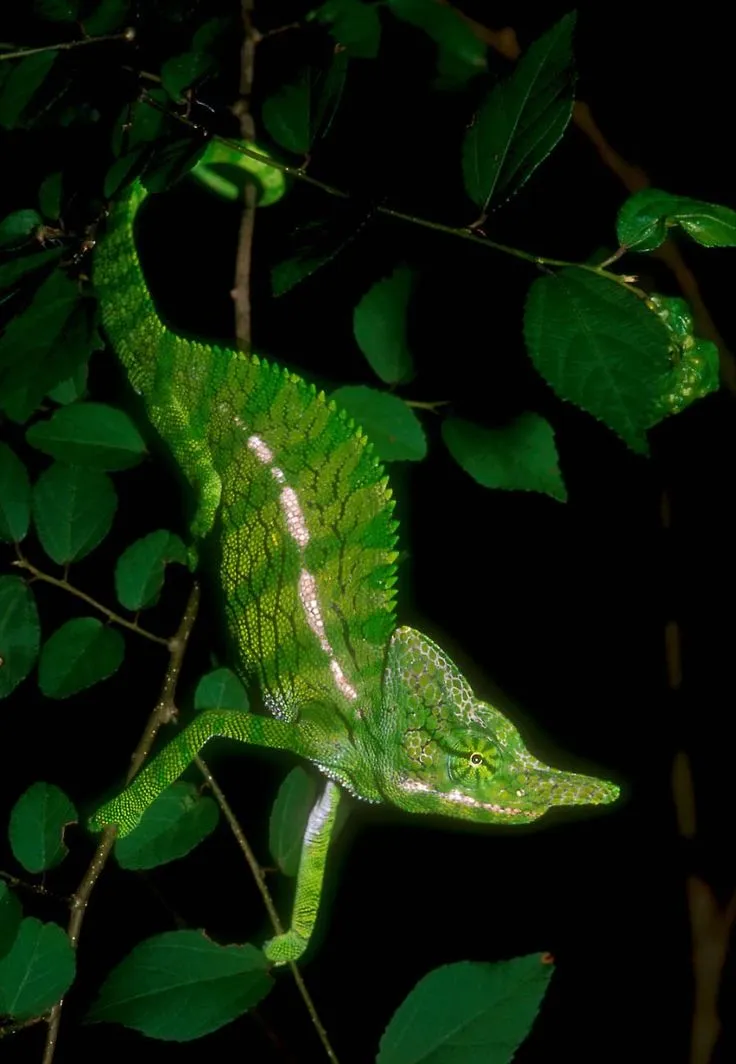
(Spiny thickets of Southwestern Madagascar.Male Furcifer antimena; high, prominent casque, small rounded rostral process on the snout, and a sharp, spiky dorsal crest.)
Next time someone says "I'd die for my kids,"
smile and think of this little lizard. She didn't just say it — she did it. And
when she went, she took her whole generation with her, in a blaze of glory.
Now that's a mother's love. 💥
· Would you trade a long, quiet life for four wild months and a rainbow explosion?
· Or is this chameleon mom just showing off?
· And be honest — did you cry a little, laugh a little, or
both?
Drop your answer below. I promise I won’t judge. Much. 😄
Comments (0)
Log in to join the discussion.
Log in