Guided by Humans, Driven by Instinct
By Johnson Owino · July 4, 2026
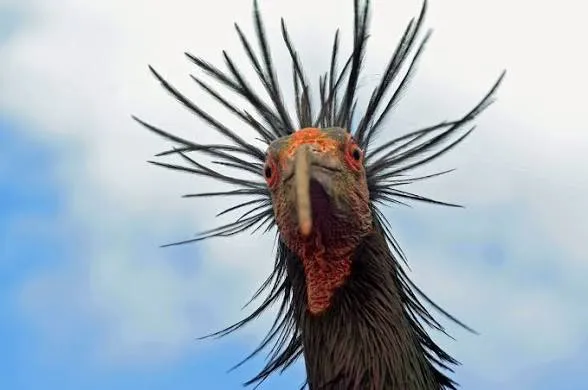
( A head-on portrait showing the bald red skin and wispy neck ruff of the bird. Schönbrunn Zoo, Vienna, Austria)
The Northern Bald Ibis is a bird that should have stayed
extinct. It vanished from Central Europe over 400 years ago, hunted to oblivion
by people who saw it as food, a nuisance, or a bad omen. Yet today, against all
odds, it is flying again because a group of scientists decided to teach it how.
What It Looks Like and Where It Lives
The Northern Bald Ibis (Geronticus eremita) is a large,
glossy black bird measuring 70 to 80 centimetres long with a wingspan of 125 to
135 centimetres. Its most striking feature is its unfeathered red face and
head, which gives it a raw, ancient appearance. A wispy ruff of feathers hangs
from its hind neck. Unlike many other ibises that wade through water, this bird
forages on dry land in barren, semi-desert, or rocky habitats, often near
running water.
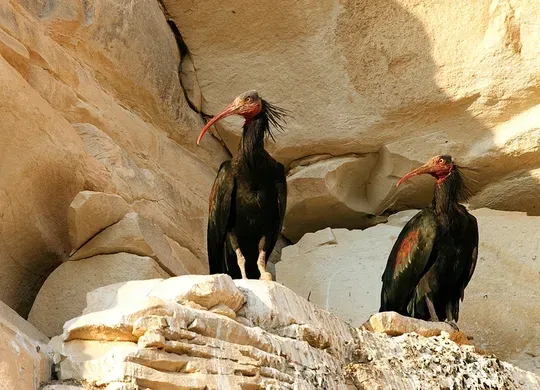
(Two Northern bald ibises standing beneath a rocky canyon overhang.Souss-Massa National Park, Morocco)
It once ranged across Europe, North Africa, and the Middle
East. Today, the only truly wild population is
in Morocco, concentrated along the Atlantic coast in the Souss-Massa National
Park and the nearby Tamri area. About 700 birds live there, making up
over 95 percent of the world's wild population. In the early 1990s, fewer than
100 remained. A semi-wild colony of about 300 birds also exists in Birecik,
Turkey. The species is currently listed as Endangered on the IUCN Red List.
The Northern Bald Ibis was not driven to
extinction by a single cause, but by a slow, relentless assault
from humans over centuries.
In Europe, the bird was hunted for food and persecuted
because of superstition. Its black plumage and
bald red head were seen as frightening, and it was often associated with death
and witchcraft. It was hunted to extinction in Germany, Austria, and
Switzerland by the 16th and 17th centuries.
In the 20th century, the remaining populations faced new
threats. Pesticides like DDT poisoned the birds and decimated their insect
prey. In Turkey, the Birecik colony plummeted from 3,000 birds in 1930 to
extinction in 1989 due to DDT poisoning and habitat loss. The species also
declined in Syria, Algeria, Ethiopia, Saudi Arabia, and Yemen.
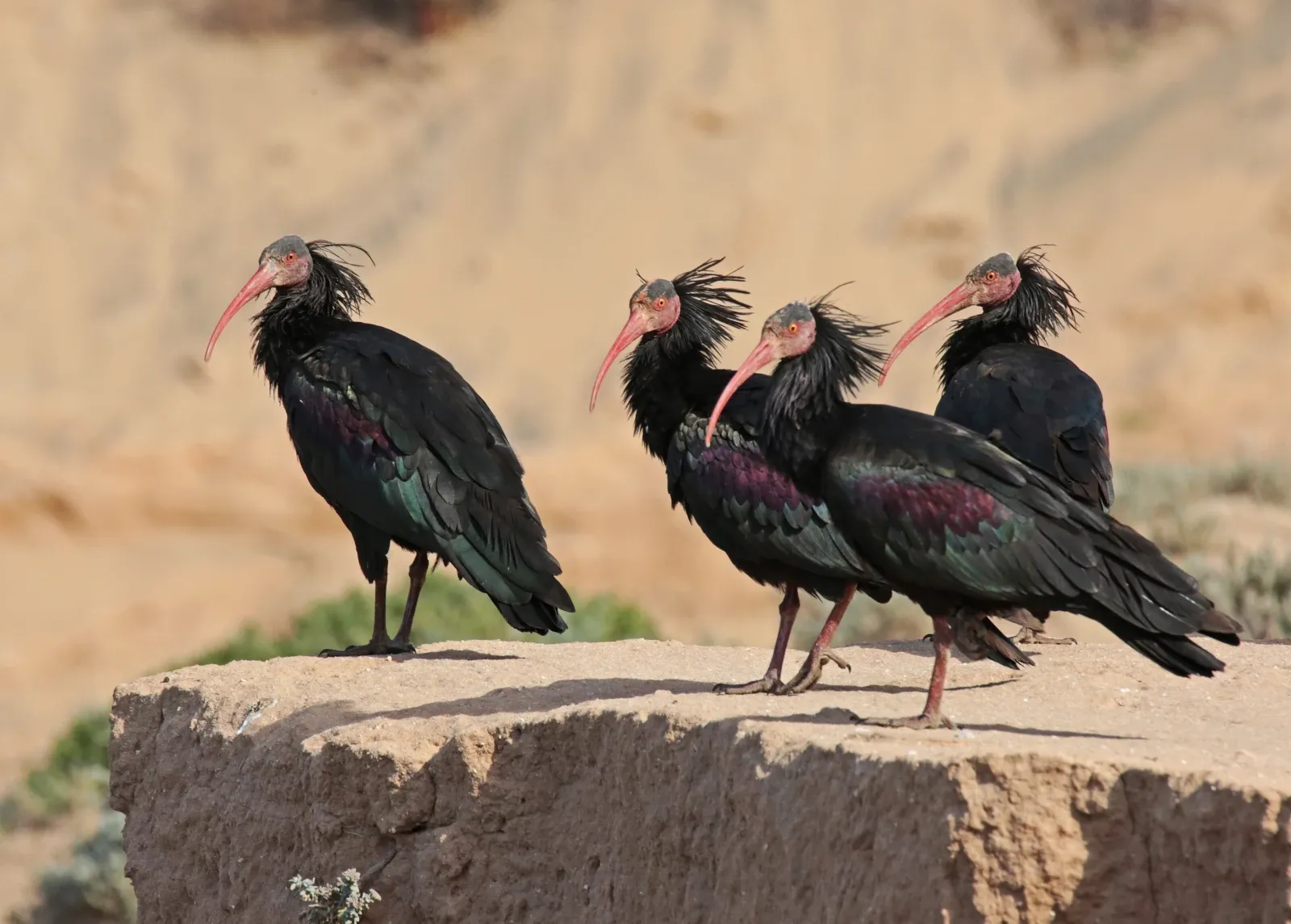
(Four adult Northern bald ibises perched together
on an earthen ledge.Souss-Massa National Park, Morocco)
By the late 1990s, the Northern Bald Ibis was
on the brink of global extinction. The only thing keeping it alive was a small,
relict population clinging to the cliffs of Morocco.
The recovery of the Northern Bald Ibis is one
of the most extraordinary conservation stories of our time. It
began in 2002, when Austrian biologist Johannes Fritz founded the Waldrappteam,
a group dedicated to bringing the bird back to Central Europe. At the time, the
population in Europe was zero.
Early attempts to reintroduce
captive-bred birds failed. The birds had the urge to migrate, but they didn't
know where to go. Without the guidance of wild-born elders, they flew in random
directions and died.
So the team tried something radical. Inspired by the film
"Fly Away Home," they decided to teach the birds how to migrate by
leading them with a microlight aircraft.
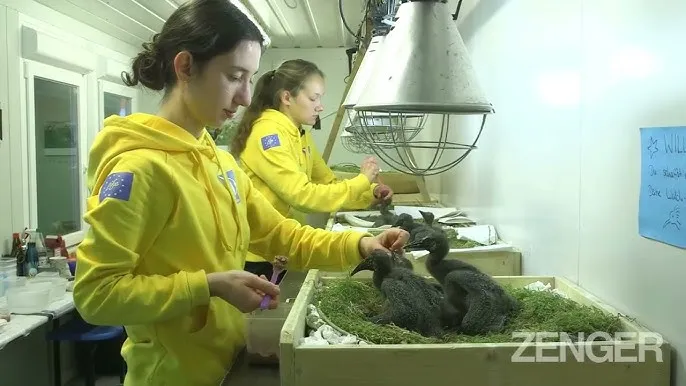
(Two human foster parents hand-feeding young ibis
chicks in an indoor rearing facility.Seekirchen am Wallersee, Austria |
Waldrappteam / Zenger News)
The chicks were removed from their breeding colonies at a
few days old and hand-reared by foster parents who imprinted on them. The
foster parents fed them, cleaned them, and interacted with them daily, building
trust. When the time came to migrate, the foster parents climbed into a
microlight aircraft, waving and shouting encouragement through a bullhorn, and
the birds followed.
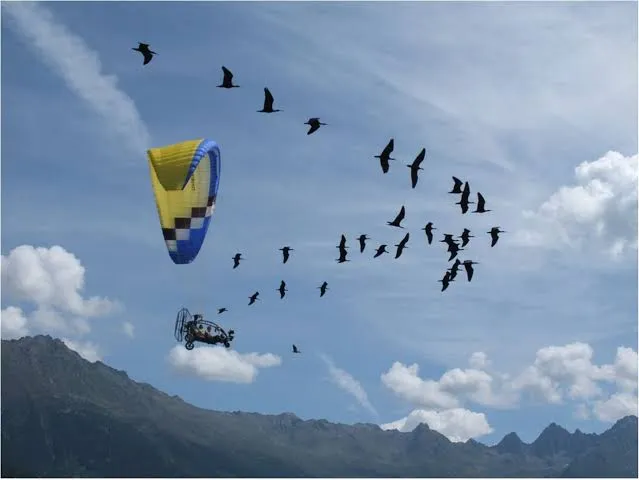
(A flock of Northern bald ibises flying in a
V-formation guided by a yellow and blue ultralight aircraft. Central European
Alps flight path, Austria | Waldrappteam via AP)
The first successful human-led migration took the birds from
Bavaria to Tuscany, Italy. Over the years, the descendants of those birds began
returning north on their own. The Central European population grew from zero to
nearly 300 birds by 2025.
Just when the project seemed to be working, a
new problem emerged. Warmer autumns, driven by climate change,
delayed the birds' departure for migration. The Alps, which the birds needed to
cross, became more dangerous because the thermal updrafts they relied on for
lift were disappearing. Without those currents, the birds struggled to cross
the mountains safely. Some became disoriented; others died in the cold.
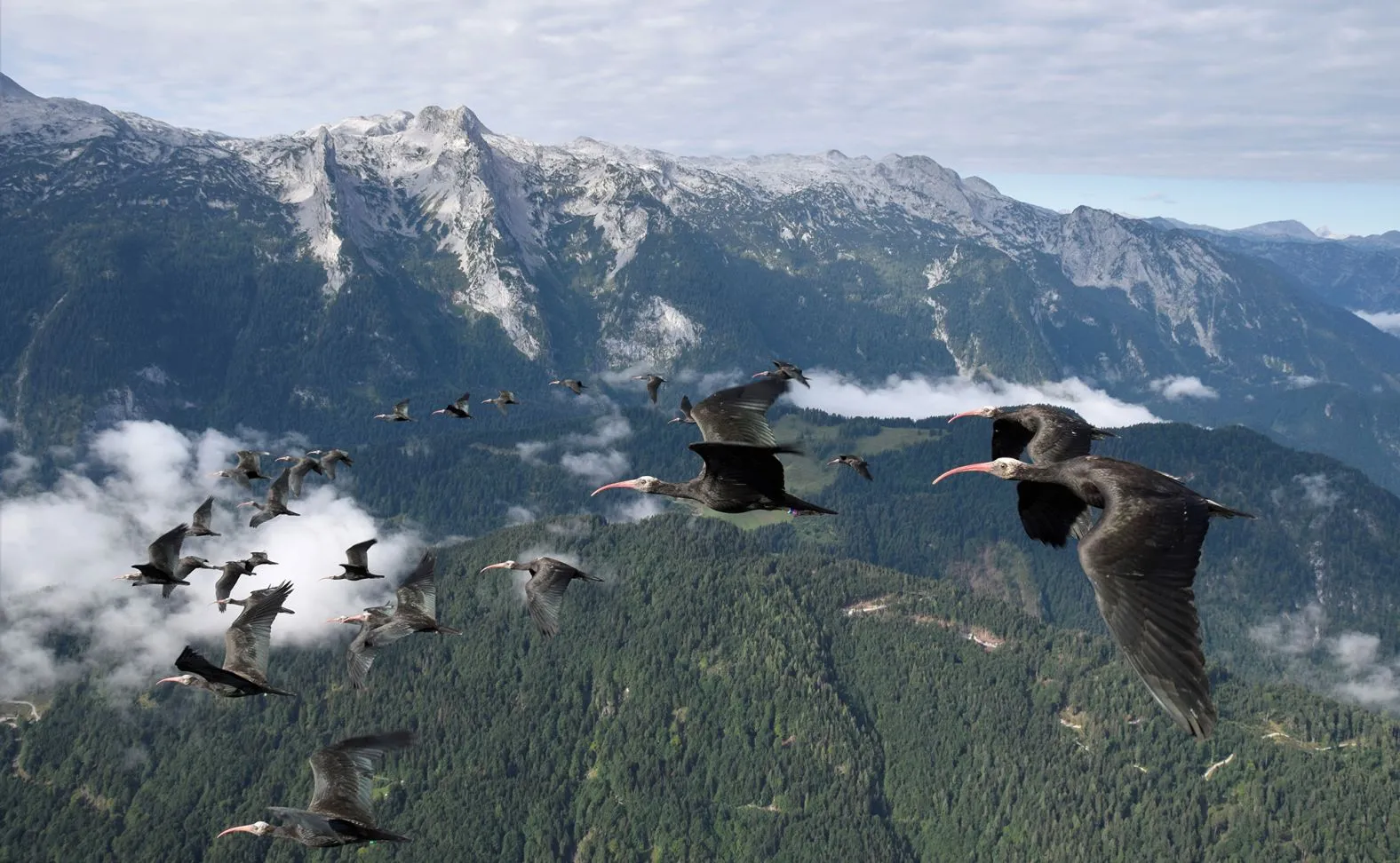
(A large flock of Northern bald ibises flying in a
V-formation high above dense pine forests and snow-dusted Alpine peaks.Tennengebirge
mountain range, Austria | Waldrappteam / LIFE Northern Bald Ibis Project)
In 2022, a male ibis named Ingrid defied the odds and flew
alone all the way to Málaga, Spain, instead of Italy. Fritz followed Ingrid's
path, leading the flock along a longer but safer route to Andalusia. In 2023,
the team guided 35 young birds to Spain for the first time. This new route
added 2,300 kilometres to the journey but avoided the dangerous Alps crossing.
The Northern Bald Ibis is not just a bird. It is a living
symbol of what we have destroyed, what we can rebuild and the power of human
ingenuity to correct human mistakes. The birds
still cannot survive without our help. They still need foster parents,
microlight aircraft, and carefully planned migration routes. The Waldrappteam's
success has moved the species from Critically Endangered to Endangered.
But the work is far from finished.
In 2024, the team counted 109 deaths, with 22 percent
caused by electrocution near power pylons. The birds remain vulnerable to
poaching and habitat loss. The reintroduction is not yet fully self-sustaining.
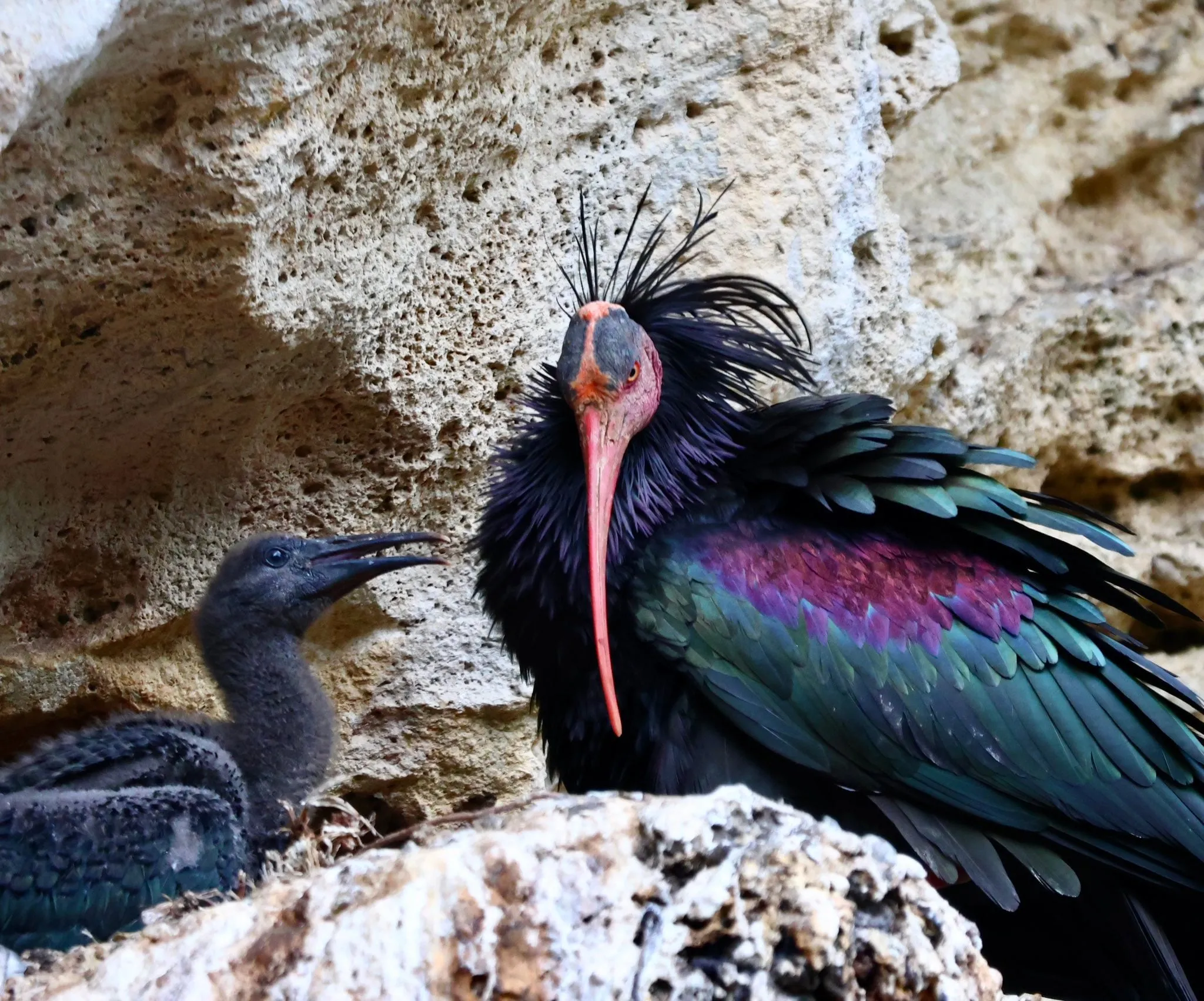
(An adult Northern bald ibis standing next to its
downy chick in a cliffside nest. Kuchl breeding site, Austria | Waldrappteam)
And yet, the fact that the Northern Bald Ibis flies at all
is a miracle. A bird that was hunted out of existence 400 years ago is back in
the skies of Europe, guided by humans who refuse to let it disappear again. It
is a strange, beautiful, and deeply unsettling partnership. We broke the world,
and now we have to teach the birds how to live in it.
At what point does helping become interfering?
The line is blurry, are we truly saving the ibis, or are we creating a species that will always depend on us?
Comments (0)
Log in to join the discussion.
Log in