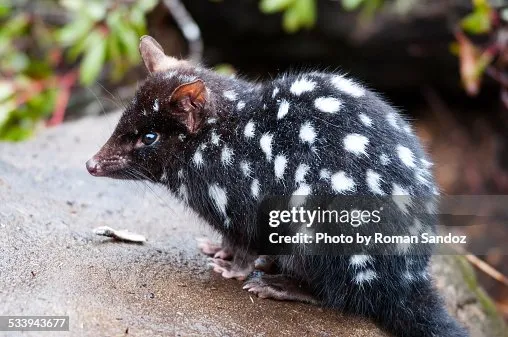
🐾 Eastern Quoll — “The Polka-Dotted Night Hunter of Tasmania”
By Johnson Owino · April 21, 2026
The Eastern quoll may look like a harmless spotted kitten,
but beneath those bright white dots lies a surprisingly fierce predator, this
marsupial stands out in Tasmania’s wildlife. Its long tail helps with balance
as it moves quickly through grasslands, forests, and even farmland edges.
Despite its cute appearance, the eastern quoll is built for hunting, with sharp
teeth and strong jaws suited for a carnivorous lifestyle.
As night falls, the eastern quoll begins its activity. It is
strictly nocturnal, quietly emerging from hollow logs, underground burrows, or
rock crevices where it spends the day resting alone. Under the cover of
darkness, it relies on excellent hearing and a keen sense of smell to locate
prey. Unlike the louder and more obvious Tasmanian devil, the eastern quoll is
stealthy, moving silently before quickly pouncing on its target. This quiet
hunting style makes it an efficient nighttime predator.
Its diet is varied and opportunistic. Eastern quolls feed on
insects, worms, small mammals, birds, reptiles, and carrion. By eating insects
and rodents, they play an important role in controlling pest populations
naturally, helping maintain ecological balance. This makes them valuable to
both natural ecosystems and farmland areas where pests can cause damage. Even
though they are small, eastern quolls are known to be bold and defensive, often
standing their ground to protect food from competitors.
The species has an
interesting and important conservation story. Once widespread across mainland
Australia, eastern quolls disappeared there in the 1960s due to habitat loss
and introduced predators such as the red fox and feral cat. Fortunately,
populations survived in Tasmania, which became their stronghold. Today,
conservationists are working to bring them back to mainland Australia through
carefully managed reintroductions in protected areas like Mulligans Flat
Woodland Sanctuary. These efforts aim to restore their ecological role and
rebuild populations in safe environments.
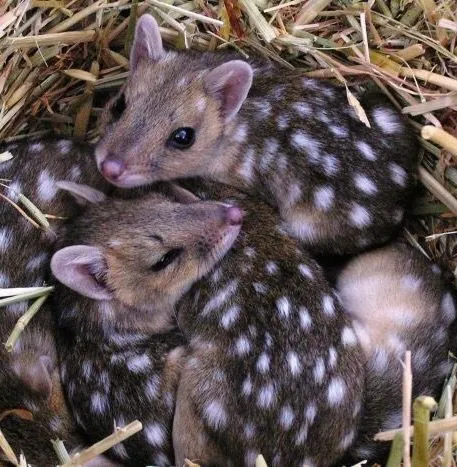
Solitary, spotted, and full of attitude, the eastern quoll
shows that size doesn’t determine impact. It is a quiet but effective hunter, a
pest controller, and a conservation comeback story all in one. As Tasmania’s
night falls silent, it’s not just devils that roam — the eastern quoll is also
out there, patrolling the darkness like a tiny, fearless guardian of the
ecosystem.
Comments (0)
Log in to join the discussion.
Log in