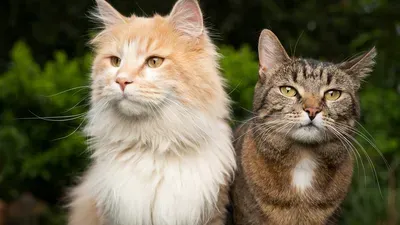
Cats Born to Roam
By Evans Osumba · March 26, 2026
Echoes of the Wild in Your Feline Companion
Cats are known for their independent spirit and unique
personalities. Unlike many other domesticated animals, they have a strong
desire for freedom that shapes much of their behavior. This natural
inclination to explore, hunt, and establish their own boundaries is deeply
rooted in a cat's ancestry. From the stealthy stalk of a tiger in the
underbrush to the solitary sprint of a cheetah across the savanna, domestic
cats carry the legacy of their grander kin in the Felidae family. Understanding
why cats love freedom - and how it mirrors the lives of lions, tigers,
cheetahs, and their wild relatives - can help us better care for and connect
with our feline friends. In this deep dive, we'll trace the evolutionary
threads binding house cats to big cats, explore the instincts that fuel their
roaming hearts, and uncover practical ways to Honor their wild side safely.
Whether your cat is batting at shadows indoors or eyeing the garden with
longing, these insights reveal why they're forever born to roam.
Roots in the Felidae Family: A Shared Savage Heritage
The domestic cat's love for freedom comes from its wild
ancestors, particularly the African wildcat. These early cats were solitary
hunters, relying on their instincts to survive. Unlike dogs, which evolved as
social pack animals, cats became solitary creatures, developing self-reliance
as a core trait. Even after thousands of years of domestication, this drive for
independence remains.
To truly appreciate a house cat's wanderlust, we must look
to the Felidae family tree, a sprawling lineage of 37 species that includes not
just domestic cats but also the majestic big cats like lions, tigers, leopards,
and cheetahs. All felines trace their origins to a common ancestor around 10.8
million years ago, a small, agile carnivore that prowled the forests of Asia.
Domestic cats (Felis catus) diverged from the African wildcat (Felis lybica)
about 10,000 years ago in the Near East, where humans first welcomed them as
rodent hunters in early agricultural settlements. Genetically, domestic cats
share a staggering 95.6% of their DNA with tigers, underscoring just how
closely our pampered pets are related to these apex predators.
This genetic kinship manifests in striking physical and
behavioral parallels. Like their big cat cousins, domestic cats boast short
digestive tracts optimized for high-protein diets, allowing them to process
meat efficiently - a trait honed for the feast-or-famine life of wild hunters.
Their retractable claws, flexible spines, and lightning reflexes enable
acrobatic feats, from leaping onto high shelves to pouncing on laser dots,
echoing the cheetah's burst of speed or the tiger's silent ambush. Even vocalizations
hint at shared roots: while big cats roar (thanks to specialized larynx
structures), domestic cats purr, chirp, and trill - subtle communications that
big cats like mountain lions use in similar ways for social bonding or alerting
kin.
Yet, it's in behavior where the roaming spirit shines
brightest. Big cats, especially solitary ones like tigers and cheetahs, embody
the independence that defines domestic cats. Tigers roam vast territories - up
to 400 square miles for males - marking boundaries with scent and scratches to
assert dominance and secure mates. Cheetahs, too, are loners, covering 50-100
square miles in search of prey, their curiosity driving them to scan horizons
for movement. In contrast, social big cats like lions form prides, but even
they patrol territories up to 100 square miles, blending communal living with
individual forays. Domestic cats, descendants of solitary wildcats, inherit
this blend: they're fiercely autonomous yet capable of selective social bonds,
much like a leopard slipping through the night alone but tolerating a companion
now and then.
The Solitary Spirit: Independence Forged in the Wild
Cats are also territorial by nature, preferring control over
their surroundings and establishing boundaries. This territorial instinct makes
them selective in their interactions and wary of unfamiliar spaces. The freedom
to explore and claim territory is essential to their sense of security.
Domestication hasn't dulled this edge; if anything, it
amplifies it in confined spaces. In the wild, African wildcats defended core
areas of 1-3 square miles, patrolling edges to ward off rivals and secure food.
Domestic cats mirror this on a smaller scale: indoor-outdoor cats might claim a
yard or neighborhood block, rubbing cheeks on fences to leave facial
pheromones - a "you've been warned" signpost akin to a tiger's
urine-marked trails. Even strictly indoor cats stake claims on perches,
scratching posts, and sunny windowsills, their subtle hisses or swats enforcing
personal bubbles.
Compare this to big cats: Leopards, solitary like domestic
cats, cache kills in trees to protect them from scavengers, a clever
territorial strategy. Cheetahs use elevated spots to survey domains, much as
your cat perches on the back of the couch to oversee the living room. This
independence isn't aloofness; it's survival wiring. In multi-cat homes, you'll
see "pride-like" dynamics emerge, with a dominant female (echoing
lionesses) coordinating hunts for toys, while males roam fringes like nomadic
tigers. Respecting this solitary streak - offering hideaways and solo playtime
- builds trust, turning wary explorers into willing lap warmers.
Hunters at Heart: The Eternal Chase That Fuels Freedom
A major reason for a cat's need for freedom lies in its
hunting instincts. Even well-fed domestic cats retain a strong drive to stalk,
pounce, and catch prey. This instinct pushes them to explore, seek new sights
and sounds, and engage in hunting-like activities, such as chasing toys or
observing birds. Outdoor cats may roam extensively in pursuit of small animals,
while indoor cats mimic this behavior by playing and watching the outside
world.
Hunting isn't optional for cats - it's hardwired, a legacy
from Felidae's predatory past. Wildcats and big cats alike spend 3-10 hours
daily in predatory mode, not just for calories but for mental fulfillment.
Domestic cats, despite kibble bowls, activate these circuits through play: the
stalk-crouch-pounce-bite sequence is identical to a lioness's takedown of a
gazelle or a tiger's riverbank ambush. Studies show house cats specialize in
certain "prey" like birds or rodents, with roaming toms covering up
to three miles nightly in pursuit, their territories overlapping like cheetah
ranges during mating season.
This drive explains the midnight zoomies or fixation on
fluttering curtains - it's the ghost of the hunt. Big cats amplify it:
Cheetahs, with their speed-focused builds, scan vast plains, curiosity peaking
at rustles, much as your cat freezes at a leaf's twitch. Tigers, ambush
masters, wait hours in cover, patience mirroring a domestic cat's laser-focused
toy chase. Even well-fed, these instincts persist; denying them leads to
boredom-fueled mischief, like shredded furniture. Channeling this through
interactive feeders or feather wands keeps the inner predator sated, roaming
mentally if not physically.
Selective Souls: Affection on Feline Terms
Cats are famous for their selective affection. Unlike dogs,
which seek constant attention, cats prefer interactions on their own terms.
They may seek cuddles one day and solitude the next, valuing the freedom to
choose when and how they engage with others. This selective affection aligns
with their love for autonomy and personal space. Respecting a cat's need for
boundaries strengthens the bond between pet and owner. When cats feel their
independence is respected, they are more likely to approach with trust and
affection.
This pick-and-choose vibe? Pure Felidae. Solitary big cats
like tigers interact briefly for mating or cub-rearing, then vanish into
solitude - echoing the domestic cat's "love me, leave me alone"
rhythm. Cheetahs bond loosely with siblings but roam solo, tolerating humans in
sanctuaries much like a trusting tabby. Lions buck the trend with pride
cuddles, but even they have "me time" hunts. For domestic cats, this
means headbutts as invitations, not obligations; forcing affection triggers
evasion, eroding bonds. Offer choices - perches near you but not on you - and
watch reciprocity bloom, as secure roamers return with purrs.
Curious Explorers: The Spark That Ignites Adventure
Curiosity is another reason cats love freedom. They are
naturally inquisitive and enjoy exploring their surroundings. The ability to
investigate new places, smells, and objects keeps them mentally stimulated and
engaged. Indoor cats benefit from enrichment through toys, climbing structures,
or safe outdoor enclosures, satisfying their curiosity in a controlled way.
Outdoor cats, meanwhile, enjoy a broader range of exploration. This exploration
keeps them mentally and physically stimulated, reducing boredom and enriching
their lives.
Curiosity killed the cat? Hardly - it's what kept Felidae
alive. Wild ancestors assessed threats via nose-first probes, a trait domestic
cats inherit as whisker-twitching investigations of boxes or socks. Big cats
exemplify it: Leopards sniff trails for hours, tigers paw at unfamiliar scents,
cheetahs scan for prey with unblinking focus. This isn't whimsy; it's
intelligence at work, processing environments to outsmart rivals. Indoor cats,
starved of stimuli, turn destructive; enrich with puzzle toys or scent trails
to mimic wild rambles, slashing stress by 30-50%.
Balancing Freedom and Safety: Roaming Without the Risks
While cats love freedom, their safety is crucial. Outdoor
environments expose cats to risks like traffic, predators, or bad weather. Many
owners, therefore, keep their cats indoors or in secure outdoor enclosures.
Indoor cats can still experience freedom through stimulating environments, such
as window views, toys, and climbing areas. A popular solution is a
"catio" - a secure outdoor enclosure that provides fresh air and
views without the dangers of free roaming.
Free-roaming cats face grim odds: triple the parasite risk,
vehicle strikes claiming millions yearly, and fights spreading FIV/FeLV. Big
cats dodge these in vast wilds, but urban domestics don't. Catios bridge the
gap - enclosed patios with shelves, tunnels, and plants - offering sun, scents,
and birdwatching sans peril. They cut escape risks, boost mood via vitamin D,
and curb indoor antics by 70%. Alternatives like harness walks or cat-proof
fences echo cheetah enclosures in zoos, blending wild urges with welfare.
Embracing the Roamer: A Legacy of Liberty
Cats' love for freedom is deeply ingrained in their nature.
From their ancestors, they inherited independence, hunting instincts, and a
strong sense of personal space. While domesticated cats adapt well to human
life, their instinctual need for freedom remains. By respecting this trait,
providing safe ways for exploration, and honoring their personal boundaries,
we can help our cats thrive while embracing their love for independence.
Understanding and supporting a cat's love for freedom allows us to create a
safe, enriching environment where they feel both secure and fulfilled. In every
curious glance out the window or triumphant toy conquest, your cat isn't just
playing - they're roaring the ancient Felidae call: born to roam, forever
untamed.
Sources
This piece synthesizes evolutionary links between domestic
cats and big cats (e.g., lions, tigers, cheetahs), emphasizing independence,
territoriality, hunting instincts, and social behaviours.
- Lions
Tigers and Bears: Explores big cats' solitary hunting and energy
conservation. Link
- Whiteside
Museum of Natural History: Traces big cat evolution, including splits
from domestic cat lineages. Link
- Cats
Protection: Details DNA similarity (95.6%) between domestic cats and
tigers. Link
- Quora
Discussion: Analyzes solitary nature of big cats like tigers and
lions. Link
- International
Cat Care: Covers predatory instincts and sensory adaptations in all
cats. Link
- Reddit
r/evolution: Compares cat-lion/tiger relations to dog-wolf divergence.
Link
- Natural
Resources Defense Council: Notes habitat and population declines in
big cats. Link
- Diamond
Pet: Debunks myths on cat descent from big cats, affirming African
wildcat origins. Link
- IFAW:
Clarifies cheetah classification and big cat distinctions. Link
Comments (0)
Log in to join the discussion.
Log in